The Military Auxiliary Radio System · Volume 3
MARS — Vol 3: A Voice From Home — Korea, Vietnam, the Ice and the Red Cross
In 1965 the commercial lines out of Vietnam could carry about thirty calls a day to the United States. By spring 1970 Army MARS alone was running more than 42,000 phone patches a month.
3.1 Korea and the 1950s: the habit forms
MARS phone patches and MARSgrams are usually said to begin with the Korean War, and that is plausible: the system was new, the Air Force was building it, and single sideband was proving itself. But this research found no contemporary figures for MARS traffic from Korea. QST in 1952 mentions hams in Korea only in passing. So the honest statement is that the service grew up in the 1950s, and the numbers come later.
Two things from that decade mattered. First, in 1952 MARS networks were authorised to carry “quasi-official… messages originated by the American Red Cross” (Morrison, Air Force Magazine, April 1989). Second, single sideband arrived. When SAC’s deputy commander put Collins SSB gear in his aircraft in 1956 and phoned home through hams, he was showing that a voice could cross an ocean on a few hundred watts, and that is what made the phone patch practical at scale (Vol 1).
3.2 Vietnam: the network that answered the phone
3.2.1 Why it was needed
The Air Force’s historian put the problem in one number. In 1965 the commercial circuits from Vietnam could carry at most about 30 calls a day to the United States, for a force that was heading toward half a million (Morrison 1989). Letters took a week or more. MARS filled the gap.
3.2.2 How fast it grew
The Army’s official history of Vietnam communications gives the timeline (Rienzi, Vietnam Studies: Communications-Electronics 1962–1970, ch. 10):
Table 1 — The Army's official history of Vietnam communications gives the timeline ([Rienzi, Vietnam Studies: Communications-Electronics 1962–1970, ch. 10](https://webdoc.sub.gwdg.de/ebook/p/2005/CMH2/www.army.mil/cmh-pg/books/vietnam/comm-el/ch10.htm))
| Date | Army MARS in Vietnam |
|---|---|
| Late 1965 | Service begins with government approval, from 6 Army stations |
| February 1966 | Phone-patch service to the United States authorised |
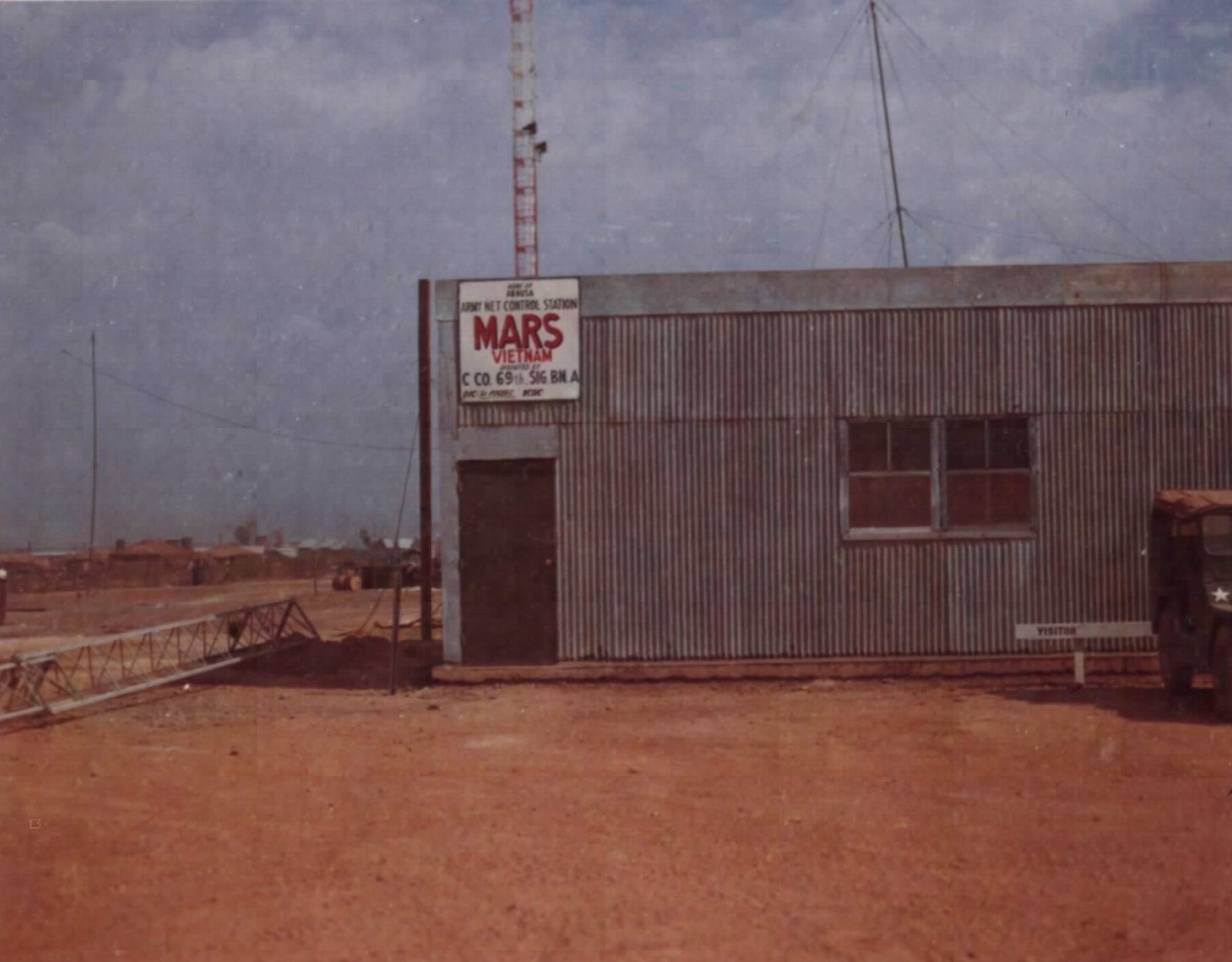
| March 1967 | A Net Control Station under construction at the Long Binh Signal Complex, run by Company C, 69th Signal Battalion |
| October 1969 | Network complete: 47 stations in 7 nets, working more than 100 contact stations in the U.S. |
| Spring 1970 | Peak: more than 42,000 phone patches a month |
The Air Force ran its own network in parallel (Morrison 1989). Seven portable stations were airlifted in and on the air by 14 December 1965, and packaged stations reached Thailand from May 1966. They put through more than 14,000 calls in 1966. In 1969, 30 Air Force MARS stations in Vietnam and Thailand, working with about 200 stateside stations, completed 210,000 phone patches, and more than 200,000 in 1970.
Don’t add these up. The Army’s 42,000 a month is one service’s peak month. The Air Force’s 210,000 is one service’s year. A figure of “2.5 million patches” across all services is widely repeated, attributed to a 1994 book, but this research could not check it against a primary source. Each number measures something different, and the honest totals stay separate.
3.2.3 What a station looked like
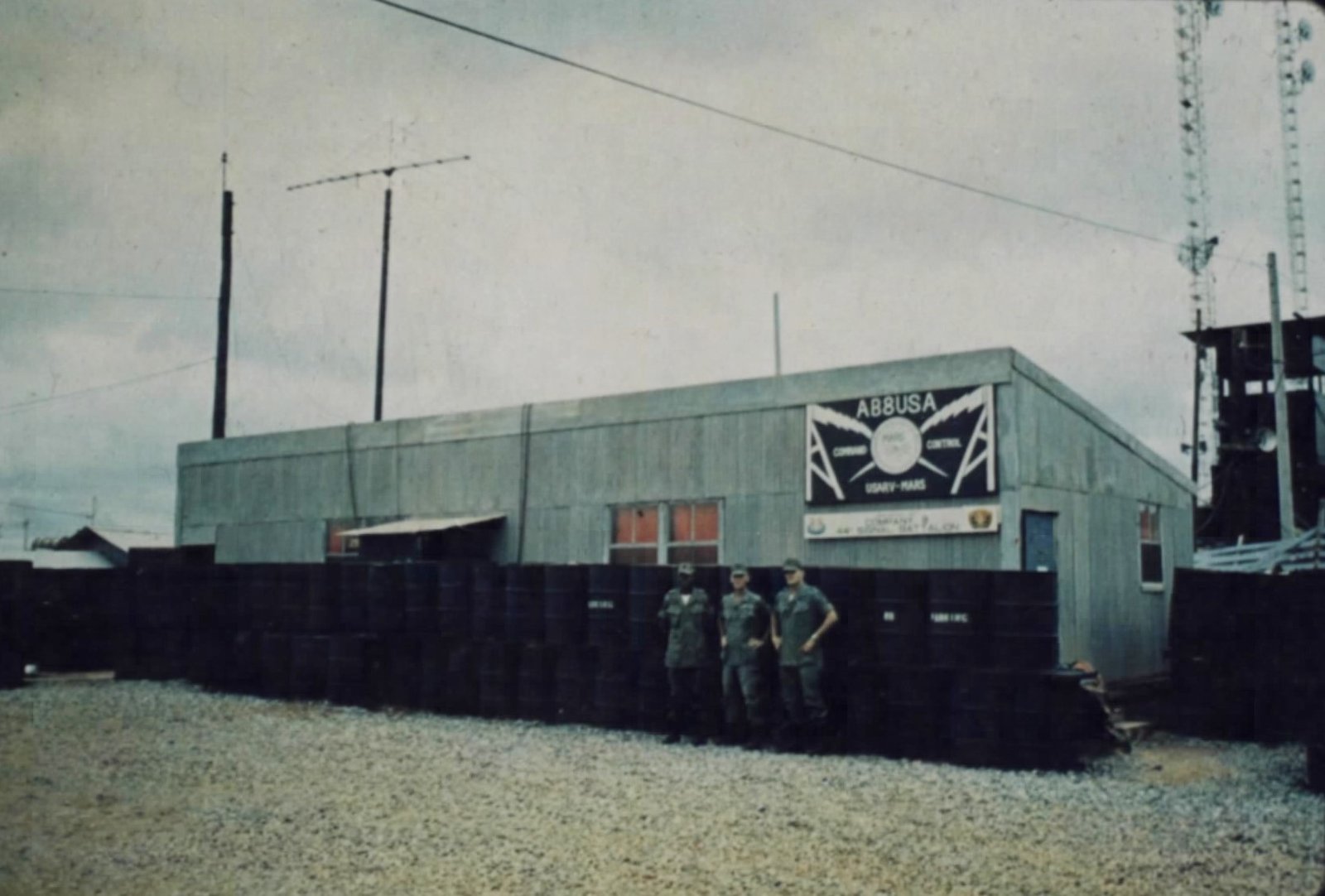
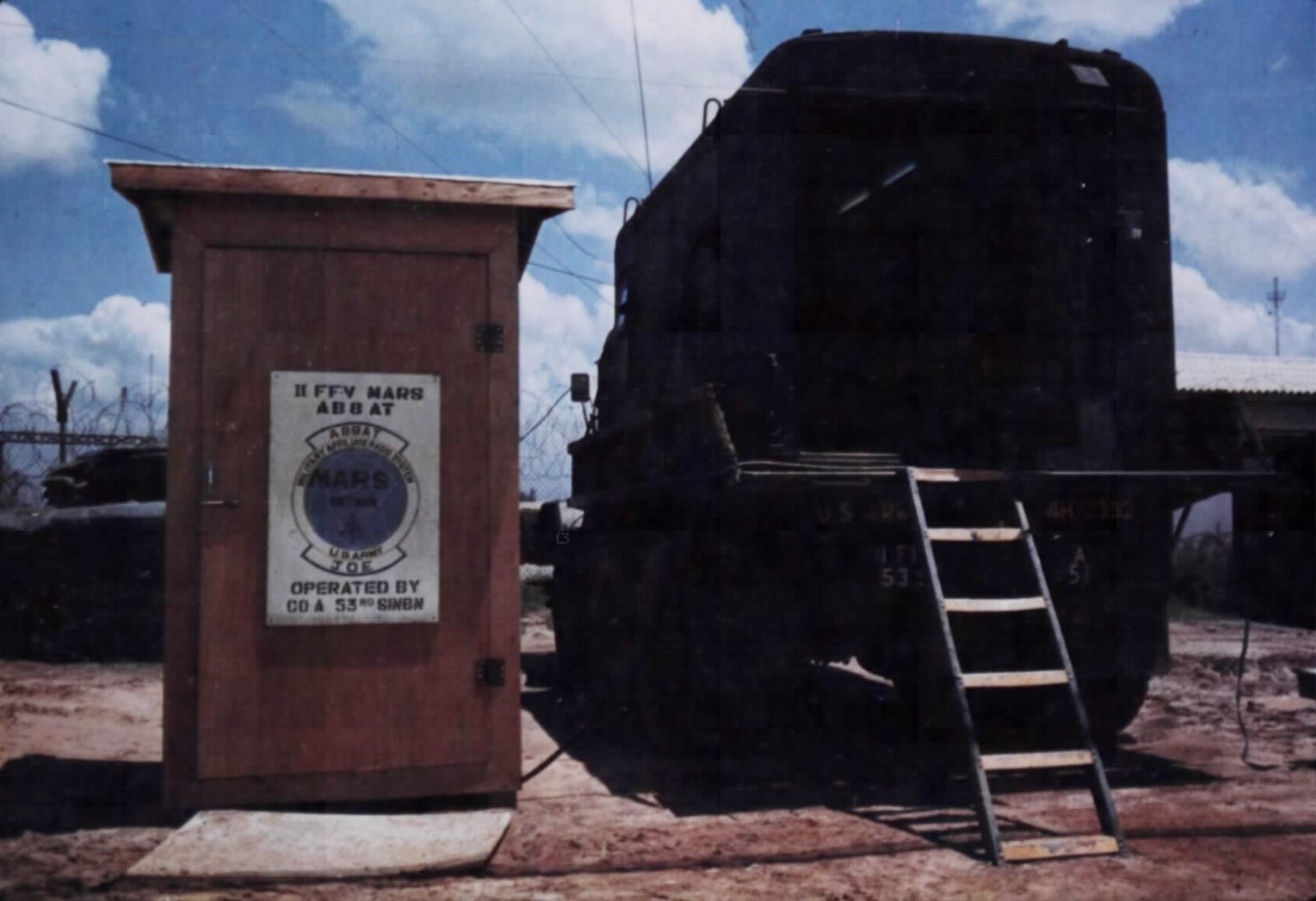
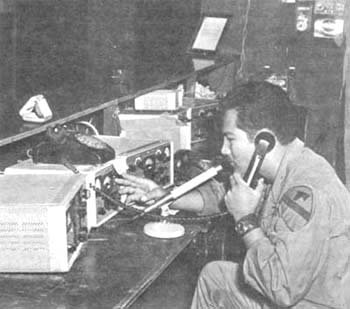
MARS in Vietnam ran on commercial off-the-shelf single-sideband gear rather than tactical radios, and the stations ranged from plywood huts behind sandbags to radios in vans. A 1969 Army photograph shows a mobile MARS station built into an AN/GRC-26 shelter on a 2½-ton truck at a Special Forces camp at Bien Hoa, fitted with Collins S-line equipment, a 30S-1 linear amplifier and “phone patch capability.” II Field Force ran another station at Bien Hoa, and the riverine base at Dong Tam had its own.
3.2.4 The other end of the call
Every patch out of Vietnam needed a station in the United States to take it and dial the phone, and those were mostly volunteers at home. Hugh Tinley (K0GHK) remembered Omaha hams running patches for Marines. A local company, Farmers National, paid the toll charges for the rest of the war, and for three months they ran a series of patches for wounded Marines in a hospital on Okinawa (Tinley memoir). That is one man’s account, but there are many like it. The stateside half of the MARS system was a few thousand people sitting up at night with a receiver, a patch and the long-distance operator.
3.3 The ice: phone patches from Antarctica
Antarctica is part of this story, with one distinction worth keeping. During the International Geophysical Year and Operation Deep Freeze, a New Jersey teenager named Jules Madey (K2KGJ) ran phone patches from his home for men at McMurdo and Little America. His first contact with the South Pole is recorded at 0408 GMT, 24 December 1956, and the Navy later flew him to Antarctica in December 1959 to meet the men he had connected (Antarctic Sun, 30 January 2009). Navy Antarctic stations were assigned the amateur block KC4USA–KC4USZ; McMurdo still uses KC4USV.
Those were amateur patches, not MARS. MARS reached the ice too: by 1987 Antarctica was a stop on the MARS Radio Teletypewriter Relay System (Vol 2), and a 1972 MARS patch from McMurdo is reported (Radio Heritage). The early, famous Antarctic patches belong to the amateur service. The habit carried over: in 2014 a MARS operator, AC7NA, described patching a sailor on a destroyer through to Minnesota for the birth of his child, “pretty emotional… the newborn baby crying in the background” (DVIDS 137276).
3.4 The Red Cross: what MARS did and didn’t carry
Accounts of MARS often say it carried the Red Cross’s emergency messages: the death in the family, the birth, the “come home now.” The real relationship is closer and more careful than that.
What is documented:
- The American National Red Cross sat on the MARS civil-military advisory committee in 1952, alongside the FCC, Civil Defense and the ARRL (QST, Oct 1952).
- From 1952 MARS was authorised to carry “quasi-official” traffic originated by the Red Cross (Morrison 1989).
- The 1987 Navy-Marine Corps course lists the Red Cross among the emergency programs a member should tell his coordinator he belongs to (MCI 25.62, §6101).
What the 1987 rules forbade: the first notice of a serious illness or death in a service member’s immediate family. The text (MCI 25.62, §3502):
“Messages concerning the initial notification of serious illness or death of a member of the immediate family (wife, child, mother, father, brother, sister, or guardian) are not authorized for transmission via MARS. Refer personnel desiring to originate a message of this type to the American Red Cross.”
Messages about funeral plans or questions after a death could go by MARS. News about other relatives or close friends could go too, but addressed to the commanding officer or the chaplain, never to the member. And “under no circumstances will a MARS member deliver such messages directly to the addressee.”
The likely reason is how emergency leave worked. The Red Cross verified a family emergency before the military acted on it, and a verified message was what got a service member emergency leave. It also arrived through the command and a chaplain, not as a teletype slip handed over a counter. MARS’s job was everything around that moment: the follow-up call, the arrangements, the “I’m on my way.”
The scale of the Red Cross’s own work shows why it needed its own channel. In Vietnam it handled more than 2,168,000 emergency communications between 1965 and 1972, from 67 field stations at the 1969 peak (American Red Cross, Vietnam War history). That document does not say how those messages travelled, and this research found no formal Red Cross–MARS agreement. Today the Red Cross runs its Hero Care emergency messaging directly, with no radio leg described (Red Cross).