The History of Morse Code · Volume 3
The History of Morse Code — Vol 3: From Wire to Ether — CQ, SOS, and the Long Goodbye
Morse code left the wire, went to sea, saved lives, got romanticized, got debunked, and finally signed off for the last time with the same four words it started with. What it did not do is die.
3.1 The jump to wireless
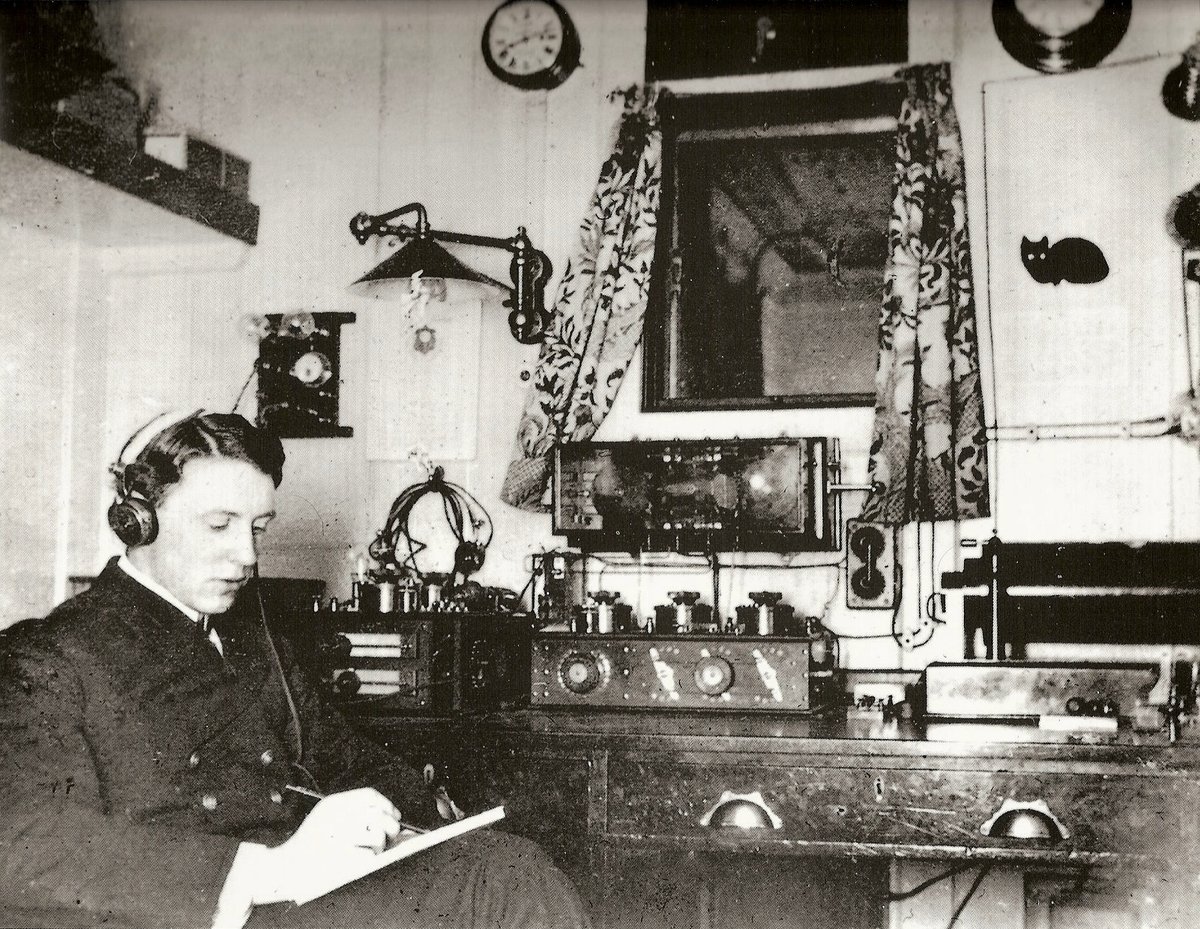
For half a century Morse code lived on iron wire. Then, at the turn of the 20th century, Guglielmo Marconi and others put it onto radio waves, and everything changed — because a wire has to be strung to wherever the message is going, but a radio wave does not. Suddenly a ship at sea could talk. That single fact — Morse code plus a spark transmitter equals a ship that is no longer alone on the ocean — is the reason the code stopped being merely useful and became, for a few decades, a matter of life and death. And it is why the most famous fragments of Morse are not letters at all, but the calls ships used to shout into the dark.
When radio adopted Morse it adopted International Morse (Volume 2 explains why: the two-length code survives noise and fading, and American Morse does not). So the shipboard code and the amateur code are the same code, and the operating shorthand that grew up on the landlines came with it.
3.2 CQ: calling anybody
The general call — “I am calling any station, please answer” — came straight off the landlines. It is CQ, and the traditional account is that it derives from the French sécurité (the “CQ” approximating the sound of sé‑cu), used on the wires as an all-stations “attention” signal before it was ever a radio call. Marconi’s operators carried it into wireless as the standard general call, and it is still exactly what I send today when I want a contact: CQ CQ CQ DE N0SWN.
Myth check — the sécurité story. The French-sécurité derivation is the traditional explanation, but radio historians treat it as debated, not proven. State it as “commonly said to come from sécurité,” not as settled fact. (Wikipedia, “CQ (call).“)
3.3 CQD and SOS: the two distress calls
Here is where the myths get thickest, so let us be precise. There have been two great maritime distress calls, and neither one is an acronym.
The first was CQD. On 7 January 1904 the Marconi International Marine Communication Company issued Circular No. 57, effective 1 February 1904, designating CQD — the general call CQ plus D for distress — as the call a Marconi-equipped ship in danger should send. It was a company convention, not an international law, and it applied to Marconi stations.
The second, and the one that won, was SOS. It was adopted at the International Radiotelegraphic Convention in Berlin, signed 3 November 1906, and it came into force on 1 July 1908. It was taken from the German “Notzeichen” distress signal, and it is chosen for one reason: it is unmistakable. Written as sound it is · · · − − − · · · — three dits, three dahs, three dits — sent as one single, continuous, unbroken sequence with no gaps between the letters.
Myth check — SOS is not “Save Our Souls.” “Save Our Souls,” “Save Our Ship,” and “Send Out Succour” are all backronyms invented after the fact. The 1918 Marconi Yearbook states flatly that the letters have “no special signification” and that it is “entirely incorrect to put full stops between them.” It is not S‑O‑S, three spaced letters — it is one continuous nine-element figure. And CQD does not stand for “Come Quick, Danger” either; that too is a backronym. (Wikipedia, “SOS,” “CQD.”)
The distinction between the two calls looks like this:
Table 1 — The distinction between the two calls looks like this
| CQD | SOS | |
|---|---|---|
| Origin | Marconi Co. Circular 57 | 1906 Berlin Convention |
| In force | 1 Feb 1904 | 1 Jul 1908 |
| Authority | Company rule (Marconi stations) | International treaty |
| Form | C‑Q‑D (three letters) | · · · − − − · · · (one unbroken run) |
| Meaning | not “Come Quick Danger” | not “Save Our Souls” |
3.4 The night both were sent
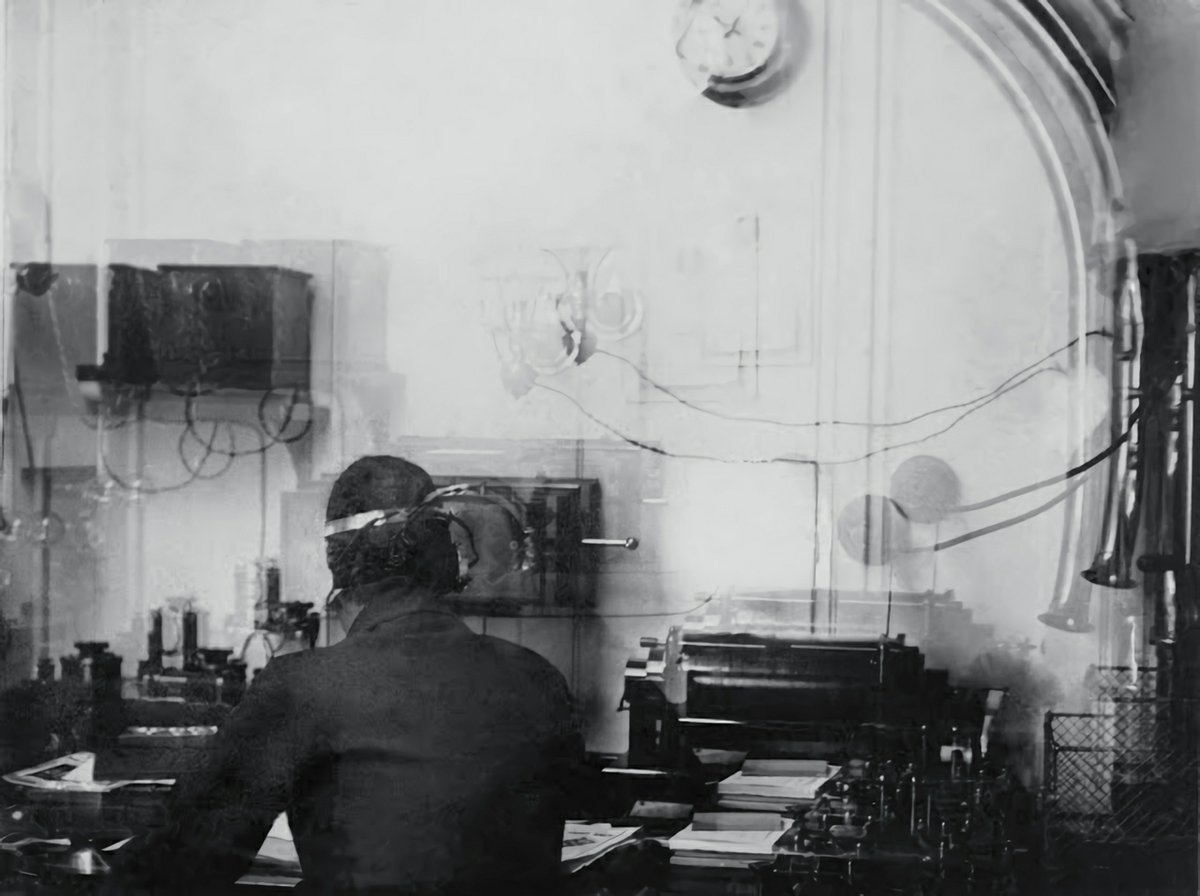
On the night of 14–15 April 1912, the RMS Titanic’s Marconi operators, Jack Phillips and Harold Bride, sent for help as the ship went down. They sent CQD first — the Marconi-company call they were used to — and then SOS, the newer international call. Bride is famously said to have suggested trying the new SOS with grim humor, since it might be his last chance to use it. The Titanic is often miscredited as “the first SOS ever sent” — it was not; SOS distress calls predate it by a couple of years. What the Titanic did was burn both calls into public memory at once, and help finish SOS’s victory over CQD.
Myth check — “the first SOS.” The Titanic did not send the first-ever SOS (there are documented uses from around 1909). Its distinction is that it sent both CQD and SOS, at the most-remembered maritime disaster in history. (Wikipedia, “CQD”; National Geographic.)
3.5 The numbers that became a language: 73, 30, and “ham”
Not everything Morse operators sent was words. The landline “92 code,” first published in 1857 and standardized by Western Union in 1859, was a set of numeric shorthands, and two of them outlived the wires entirely:
- 73 is the one I still sign every contact with. It means “best regards” today — but that meaning drifted. In the 1857 list it was affectionate (“love and kisses” territory); by the 92-code era it softened to “accept my compliments”; and only by about 1908 did it settle into the “best regards” every ham now means by it. It is singular — “seventy-three,” not “seventy-threes,” though ”73s” persists colloquially.
- 30 meant “the end — no more,” and it passed from the press wires into journalism as the sign-off newspaper reporters typed at the bottom of a story. It spread widely through the Phillips Code (Walter P. Phillips’s press abbreviations, first published 1879).
And then there is “ham” itself — the word for what I am. Its origin is contested, and I want to give it to you honestly rather than repeat a tidy fake.
Myth check — “ham.” The best-supported account is that “ham” was a put-down from landline telegraphy for a poor, “ham-fisted” operator, documented in trade usage by the 1880s–90s, that carried over as an insult to early wireless amateurs (there is a 1909 account of one operator sneering “I think he is a ham”) and was later reclaimed by amateurs themselves as a neutral badge of pride, spreading from about 1920. What it is not is an acronym: the popular story that “HAM” comes from a Harvard station’s operators named Hyman, Almy, and Murray is a debunked myth that first surfaced around 1948 and does not check out. The derogatory-telegrapher origin is the leading hypothesis, not a proven fact — so I say “most likely,” and I leave it there. (Wikipedia, “Etymology of ham radio.”)
3.6 The long goodbye
Commercial Morse did not end with a bang; it ended on a schedule. The Global Maritime Distress and Safety System (GMDSS) — satellites and automated digital calling instead of a human at a key keeping watch — became mandatory on 1 February 1999 for the world’s SOLAS ships. Morse watch-keeping at sea was over.
In the United States the last commercial radiotelegraph station, KPH (with sister stations KFS/KPH on the California coast, operated latterly by Globe Wireless), signed off on 12 July 1999. It closed, deliberately and beautifully, with the very first message ever sent on an American wire — WHAT HATH GOD WROUGHT — followed by the prosign SK, “end of contact.” A hundred and fifty-five years, bracketed by the same four words.
Myth check — “the last Morse ever.” KPH’s 1999 sign-off was the last commercial Morse in North America, not the last Morse. The station lives on: the Maritime Radio Historical Society fires it up as a living-history station, most famously every year on the “Night of Nights.” The code did not go silent; it went volunteer. (Wikipedia, “KPH (radio station).”)
For amateurs, the other shoe was the Morse exam. For most of a century you could not hold a serious U.S. ham license without passing a code test — 20, 13, or 5 words per minute depending on class. In the 2000 restructuring (FCC WT Docket 98-143, effective 15 April 2000) the three speeds collapsed to a single 5 WPM test. Then, in Report & Order FCC 06-178, the Morse requirement was dropped entirely for all license classes, effective 23 February 2007. (Cite the effective date, not “2006” — the order was released in December 2006 but took effect the following February.) The friendly civil war that followed — the “no-code” hams versus the traditionalists — has largely faded, because the people who love the code never needed a rule to make them learn it.
3.7 Why it did not die
I learned the code because I wanted to, not because a test made me. That, in the end, is why Morse is still on the air after the ships and the regulators walked away from it. There is a hard-nosed engineering reason — a trained human ear and brain make an extraordinary narrowband detector, so CW gets through when voice cannot, on a fraction of the power and bandwidth; it is the mode that still works when the band is barely open. And there is the reason underneath that one, which is not engineering at all: it is a craft, it has a rhythm, it is meditative, and once it is in your hands it does not leave. Modern digital modes like FT8 have taken over the weak-signal DX work that RTTY and CW once did — I will be honest about that in the Teletype, Tape & RTTY sub-project — but taking over the job is not the same as replacing the thing.
The story that started when Vail’s stylus pressed the first dot into a moving paper tape runs, unbroken, right up to a Raspberry Pi decoding tones on my bench tonight. Every brass key, every semi-automatic bug, every electronic keyer and chrome autokeyer, every clattering teletype and reel of pink tape in the sub-projects ahead is a variation on the one idea Morse and Vail and Gerke and a boy sitting in his father’s shack all fell for: that a pattern of dots and dashes and silence is a language, and that it can go anywhere.
3.7.1 Sources (Vol 3)
- Wikipedia, “CQD” and “SOS” — Circular 57 (1904), the 1906 Berlin Convention / 1 July 1908, the unbroken form, and the backronym corrections; Titanic’s use of both calls. https://en.wikipedia.org/wiki/CQD · https://en.wikipedia.org/wiki/SOS
- Wikipedia, “Wire signal” (the 92 code) and “Etymology of ham radio” — 73/30 origins and the contested “ham” etymology (Harvard-callsign story debunked). https://en.wikipedia.org/wiki/Wire_signal · https://en.wikipedia.org/wiki/Etymology_of_ham_radio
- Wikipedia, “Global Maritime Distress and Safety System” (GMDSS mandatory 1 Feb 1999) and “KPH (radio station)” (12 Jul 1999 sign-off; Maritime Radio Historical Society “Night of Nights”). https://en.wikipedia.org/wiki/KPH_(radio_station)
- FCC Report & Order FCC 06-178 (WT Docket 05-235), Morse exam eliminated effective 23 Feb 2007; and the 2000 restructuring (WT Docket 98-143). https://www.fcc.gov/document/fcc-modifies-amateur-radio-service-rules-eliminating-morse-code-exam