The History of Morse Code · Volume 1
The History of Morse Code — Vol 1: The Spark, the Wire, and the Men (1837–1844)
How a portrait painter, a machinist's son, and a physicist's electromagnet put the first sentence onto a wire — and which parts of that famous story are actually true.
1.1 Why I start here
I have been listening to Morse code my whole life. In my father’s ham shack in the late 1960s and early ’70s I would sit for hours while the dots and dashes came out of the speaker, and next to the receiver the teletype machines clattered and spooled their pink paper tape. I did not understand a word of it then. I just knew it was a language, and that grown men were having conversations in it across the whole planet with nothing but a key, a wire, and a little power. I am N0SWN now, licensed and still running CW, and I have never gotten over it.
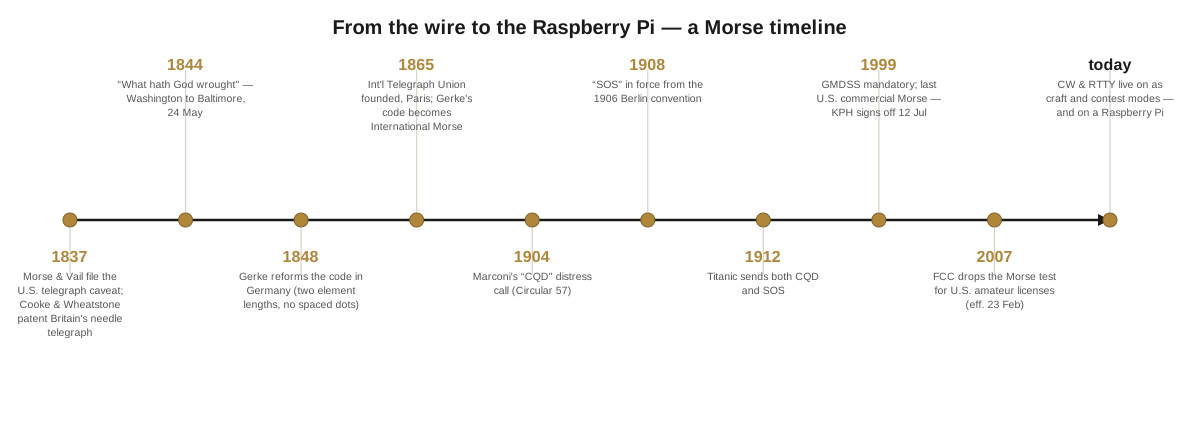
So this is where the whole story begins — not with a key or a bug or a chrome autokeyer (those come later, and I promise we will get to my beloved Hi-Mound UFO), but with the single idea underneath all of it: that you can make a distant electromagnet click in a pattern, and that a pattern is a language. Everything else in this project — every brass key, every bug, every teletype, every RTTY signal, every Raspberry Pi decoding tones today — is a footnote to that idea. Figure 1 is the map of where we are going.
1.2 The problem the telegraph solved
Before 1844, a message travelled exactly as fast as a horse, a ship, or a semaphore tower could carry it. The electric telegraph broke that link between information and transport for the first time in human history — the reason Tom Standage rightly calls it “the Victorian Internet.” The physics that made it possible was not Samuel Morse’s. It was Joseph Henry’s. In the early 1830s Henry built powerful insulated-coil electromagnets and showed you could ring a bell at a distance over a mile of wire, and he is credited with the electromagnetic relay around 1835 — a small electromagnet that uses a weak, faded line current to switch a fresh local battery, so a signal can be regenerated and pushed onward. Without the relay, no telegraph line could span more than a short distance; with it, they could cross a continent. Henry never built a telegraph, and he later felt Morse never adequately acknowledged him — a grievance that hardened into a patent-era feud. It is fair to say Henry supplied the ground the telegraph stood on.
Myth check — “who invented the telegraph.” Calling Joseph Henry “the inventor of the telegraph” overstates it; calling Morse’s system wholly original understates Henry’s electromagnet and relay. Both are wrong. Morse and Vail engineered a practical, commercial telegraph on top of physics that was substantially Henry’s. (Smithsonian Institution Archives; Wikipedia, “Joseph Henry.”)
1.3 The three men who actually built it
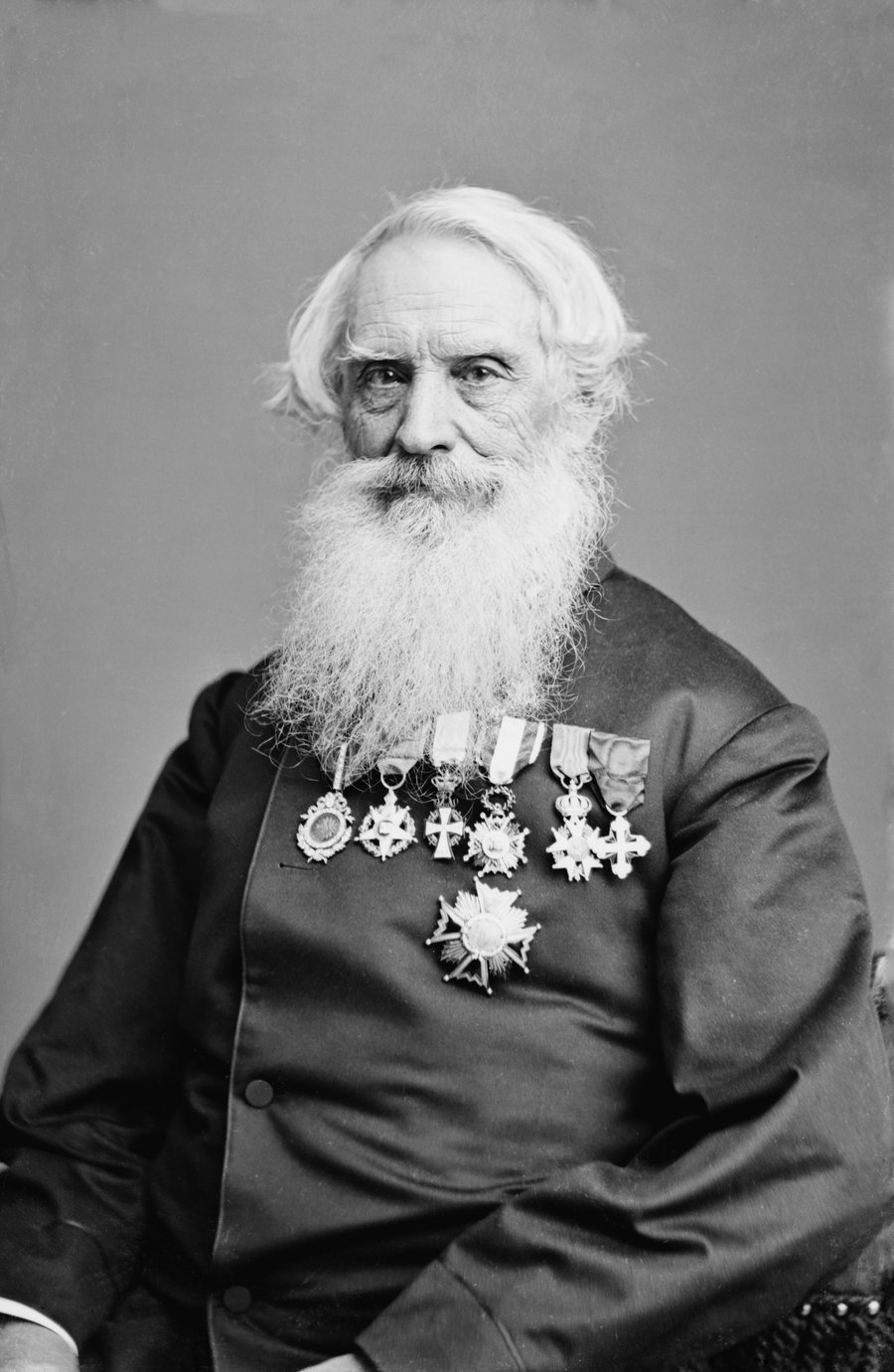
Samuel F. B. Morse (1791–1872) was a successful portrait painter and, by temperament, a promoter — the man who could get Congress to pay for the thing. In 1837 he, along with Alfred Vail and the chemistry professor Leonard Gale, filed a caveat (a placeholder patent notice) for an electric telegraph; the U.S. patent itself was granted in 1840. In February 1838 Morse demonstrated the apparatus for members of Congress. But a demonstration is not a network, and Morse spent the next five years lobbying for money to build a real line.
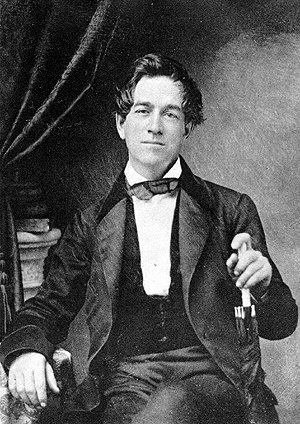
Alfred Vail (1807–1859) is the name most people have never heard, and that is a historical injustice worth correcting carefully. Vail’s family owned the Speedwell Ironworks in New Jersey, which gave the project a workshop and money, but Vail’s own contribution was engineering, not just funding. He built the practical register (the clockwork recorder that pressed dots and dashes into a moving paper tape), and he built a simpler, more reliable key than Morse’s original. And — this is the part that matters most for us — modern scholarship holds that Vail did much of the real work of designing the dot-and-dash alphabet itself, replacing Morse’s clumsy earlier scheme, which had used a numbered codebook (you looked words up by number) rather than a per-letter alphabet.
Myth check — the printer’s type case. The beloved story is that Vail walked into a Morristown printer’s shop, counted the movable type in the compositor’s case to find which letters English uses most, and assigned the shortest codes (E = one dot, T = one dash) to the commonest letters. It is a great story and the underlying principle is genuinely built into the code — but the specific type-case anecdote is tradition, not documented fact. Vail could as easily have used letter-frequency knowledge that already existed. Treat the frequency-weighting as real and the type-counting scene as folklore. (Wikipedia, “Alfred Vail,” citing the historiography.)
Why did the code end up under Morse’s name if Vail did so much of it? Because Vail’s contract assigned his rights to Morse, and because Vail, in his own lifetime, publicly credited Morse and did not claim the alphabet for himself. The “Vail really invented it” case was pressed mostly by later advocates, including his descendants. The honest verdict is not a heist; it is a collaboration whose credit got flattened onto one name — the promoter’s.
1.4 1843: Congress pays
On 3 March 1843, President Tyler signed a bill appropriating $30,000 to build an experimental telegraph line from Washington to Baltimore, about 38 miles along the Baltimore & Ohio Railroad right-of-way. The vote was closer and more mocked than the triumphant retellings admit — telegraphy shared the floor with a satirical proposal to fund research into “mesmerism.” But it passed, and Vail supervised much of the construction. After a false start trying to bury the wire, they strung it on poles with glass insulators, and by May 1844 the line was live.
1.5 May 1844: the first sentence
On 24 May 1844, from the Capitol in Washington, Morse sent the message WHAT HATH GOD WROUGHT to Vail, who received it in Baltimore and sent it straight back. The line worked. The words were not Morse’s — they were chosen by Annie Ellsworth, the young daughter of the Commissioner of Patents, Henry Ellsworth, and they are drawn from the King James Bible, Numbers 23:23.
There are two details the confident versions of this story usually get wrong, and I want to plant the flag on both:
Myth check — the room. You will read everywhere that Morse sent the message “from the Old Supreme Court Chamber” in the Capitol. The U.S. Senate Historical Office cautions that this is undocumented — the specific-room accounts appeared decades later, and researchers “found no documentation” pinning the send to the Supreme Court chamber. Say “from the Capitol,” not the chamber, unless you are quoting the legend as legend. (senate.gov, “Morse’s Telegraph in the Capitol.”)
Myth check — the phrase and the question mark. The line was chosen by Annie Ellsworth, not by Morse, and the original paper tape does not carry the question mark that later quotations added. It is a statement of awe, not a question. (Library of Congress, Samuel Morse Papers.)

1.6 What the machine actually did in 1844
The 1844 system did not yet read by ear. Vail’s register was a clockwork mechanism that drew a strip of paper under a stylus; when line current energized an electromagnet, the stylus pressed, embossing (and later inking) a dot for a short pulse and a dash for a long one. An operator then read the marks off the tape and transcribed them. Within a few years American operators discovered they could copy faster by ear — listening to the clacks of the armature going down and up — than the pen could scratch, and the register was quietly demoted to a backup. That acoustic habit is the hinge of this whole history: it is why the receiving instrument evolved into the sounder (covered in The Telegraph → Sounders, Relays & Landline Instruments), and it is the direct ancestor of the way I copy CW in my head today, eighteen decades later. The hand that sends and the ear that copies were both already present in 1844.
1.7 Where this leaves us
By the end of 1844 the essential idea was proven and three things were true that shape everything that follows in Dots & Dashes: the telegraph rode on Henry’s electromagnet and relay; the practical apparatus and very likely the alphabet were substantially Vail’s; and the code that ran on that first line was American Morse — a code with spaced dots and long dashes that most hams today have never actually seen, because radio would later throw it out and adopt a German reform instead. That split — two different “Morse codes,” and why the one you know won — is the subject of Volume 2.
1.7.1 Sources (Vol 1)
- U.S. Senate Historical Office, “Samuel Morse’s Telegraph in the Capitol” — the $30,000 appropriation (3 Mar 1843), Annie Ellsworth, and the caution against the “Supreme Court Chamber” claim. https://www.senate.gov/artandhistory/senate-stories/morses-telegraph-in-the-capitol.htm
- Library of Congress, Samuel F. B. Morse Papers, “Invention of the Telegraph” — 1837 caveat, 1838 congressional demonstration, 1840 patent, the 1844 message. https://www.loc.gov/collections/samuel-morse-papers/articles-and-essays/invention-of-the-telegraph/
- Smithsonian Institution Archives, “The Forgotten History of Alfred Vail and Samuel Morse” — Vail’s register, key, and code work. https://siarchives.si.edu/blog/forgotten-history-alfred-vail-and-samuel-morse
- Wikipedia, “Alfred Vail,” “Joseph Henry,” “Baltimore–Washington telegraph line” (leads; used to chase the primary citations above). ⟨type-case anecdote flagged as disputed per this article’s own historiography⟩