Paper Tape and the Perforator · Volume 2
Paper Tape & the Perforator — Vol 2: The Machines of the Tape
Punching it, reading it, and the wonderful low-tech network that ran on it: the perforator, the reperforator, the transmitter-distributor, and a message-switching system that worked by tearing paper off one machine and feeding it into another.
2.1 Punching the tape: perforators
A message gets onto tape one of two ways, and the difference is the whole point of tape.
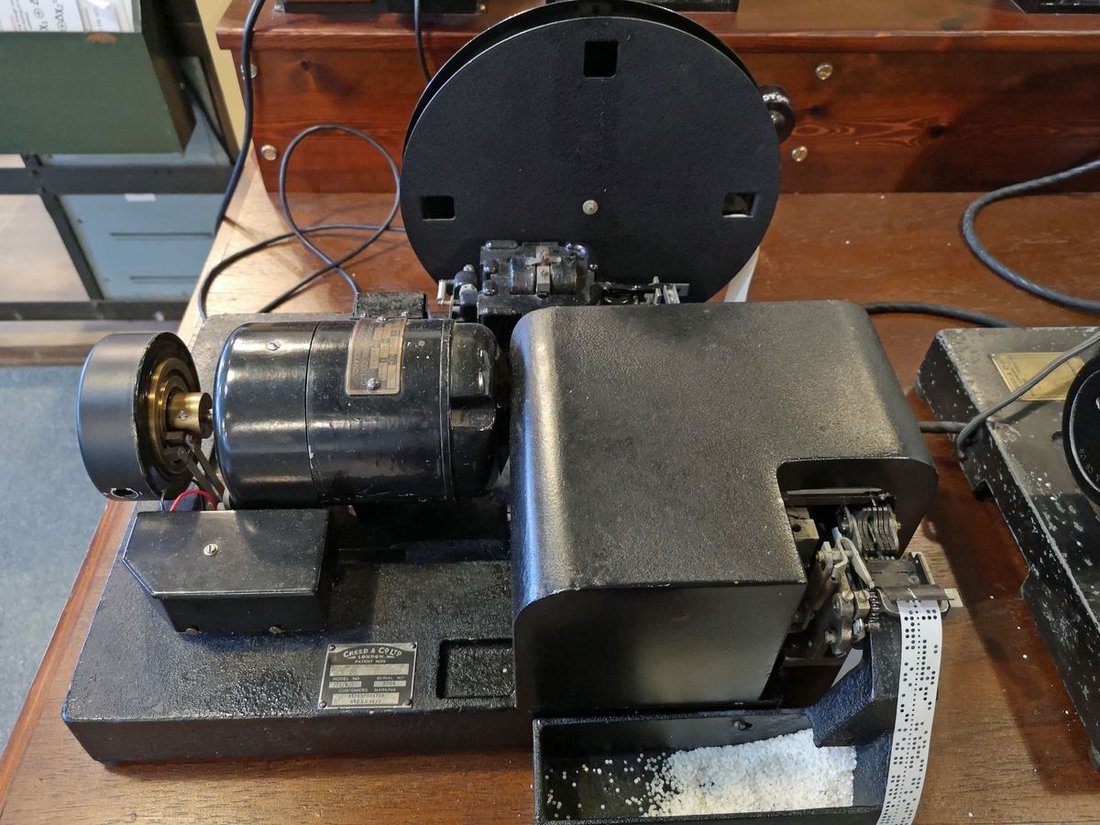
- A keyboard perforator punches tape as you type — you’re preparing a message offline, at your own pace, without tying up the line. (The very first ones, from Creed, punched the holes with puffs of compressed air.)
- A reperforator punches tape automatically from a received signal — a machine at the far end of the wire silently recording everything that comes in as a punched ribbon, no operator needed.
- A typing reperforator does both jobs at once: it punches the tape and prints the characters right on it, so you get a human-readable ribbon you can proofread by eye.
2.2 The chad problem — and “chadless” tape
Punching holes makes confetti. Each hole knocked out of the tape leaves a little paper disc called a chad, and a busy punch produces a snowstorm of them (the oiled tape’s chad clumps into a gummy mess — every tape room had a chad bucket). There’s a clever fix that solves a real problem: chadless tape. Instead of punching the disc all the way out, a chadless punch cuts a little U-shaped flap and leaves the disc hinged in place, like a tiny trap-door — no chad at all. Why bother? Because a typing reperforator has to print on the tape, and a fully-punched hole would have removed the very paper the printed letter needs to sit on. The flap keeps the paper there. (The catch: chadless tape jams an optical reader, because the little flaps block the light — so it was for human-readable tape, not high-speed re-reading.)
2.3 Reading the tape: the transmitter-distributor
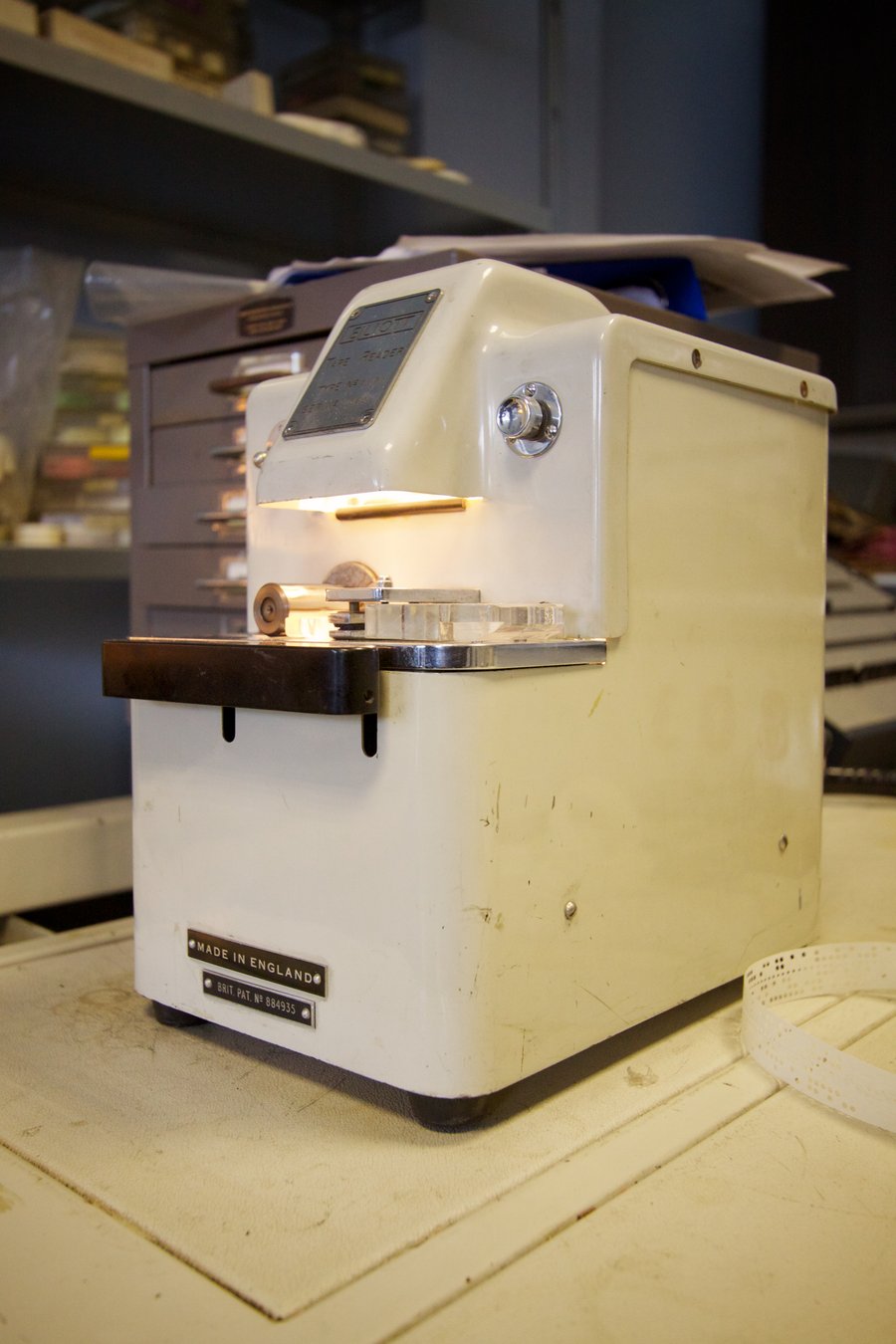
To send a punched tape, you feed it into a transmitter-distributor (TD) — the tape reader. Its name tells you it does two jobs: it reads the holes (mechanically, with sensing pins that feel for a hole or no-hole in each track — later machines read them optically with a lamp and photocells) and it distributes them, serializing the five bits of each column out onto the line as a proper start-stop character, at a steady machine-controlled speed. That last part is the magic: a TD sends your message at the full, flawless line rate, with none of the hesitations, typos, or backspaces of live typing. Punch it once, proofread it, and the machine sends it perfectly every time.
2.4 Why tape mattered: store-and-forward and the torn-tape relay
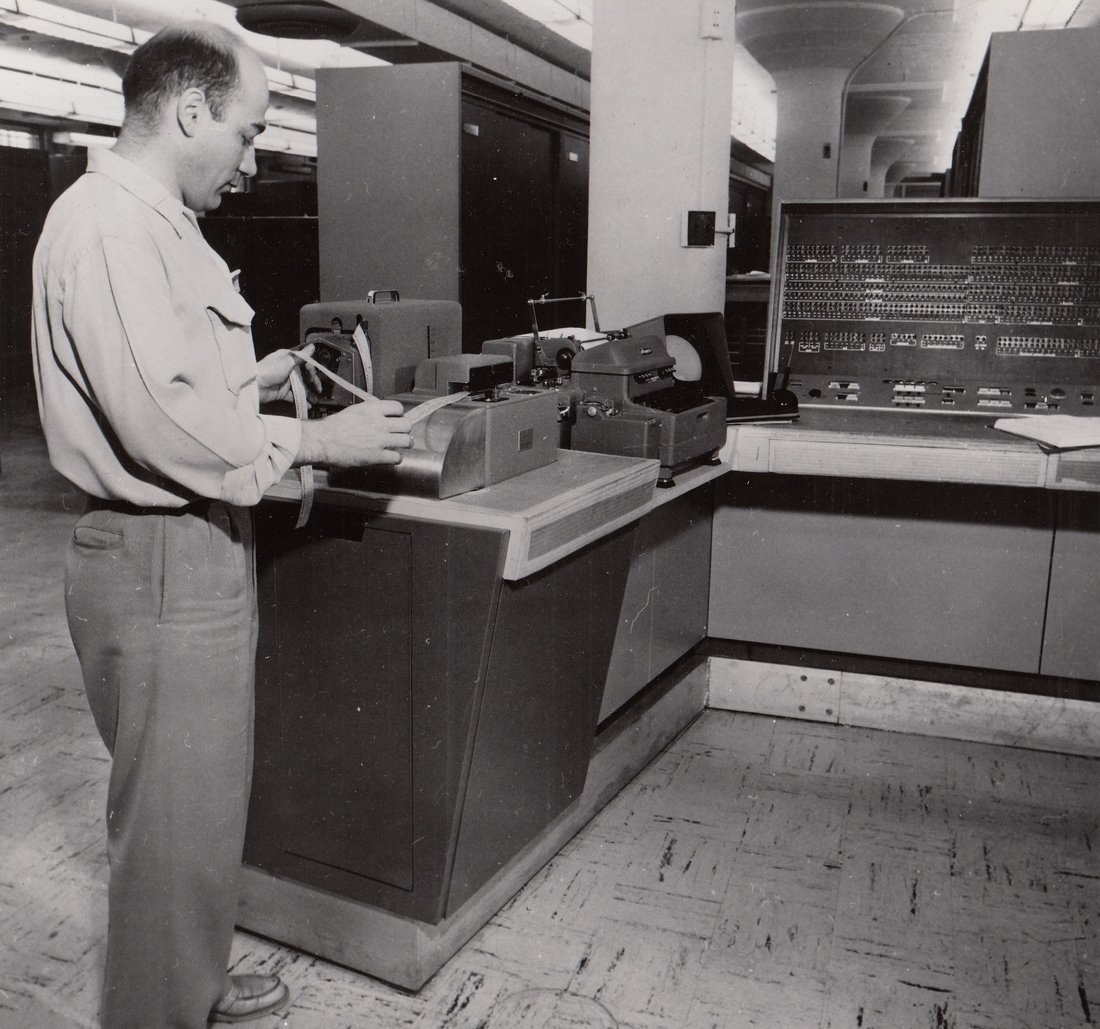
Put the perforator and the TD together and you get store-and-forward — the idea that would later define computer networks. You don’t need the whole path from sender to receiver to be free at once: you punch the message to tape at each hop, hold it, and send it onward when the next line is clear. Message centers were rooms full of teleprinters with racks of punched tapes waiting their turn.
And the most gloriously low-tech version of it is the torn-tape relay, a real, named system (Teletype even published a “Universal torn-tape system” in 1962). At a relay station, an incoming message is punched onto tape by a reperforator. An operator physically tears the tape off the machine, walks it a few feet, and feeds it into the transmitter-distributor pointed at the next station in the route. That’s it. A continent-spanning message network, running on people ripping paper ribbons off one machine and threading them into another — a bucket brigade of tape. It sounds absurd and it worked beautifully for decades, on the military nets, the press wires, and the commercial Telex system.
2.5 Why I still love it
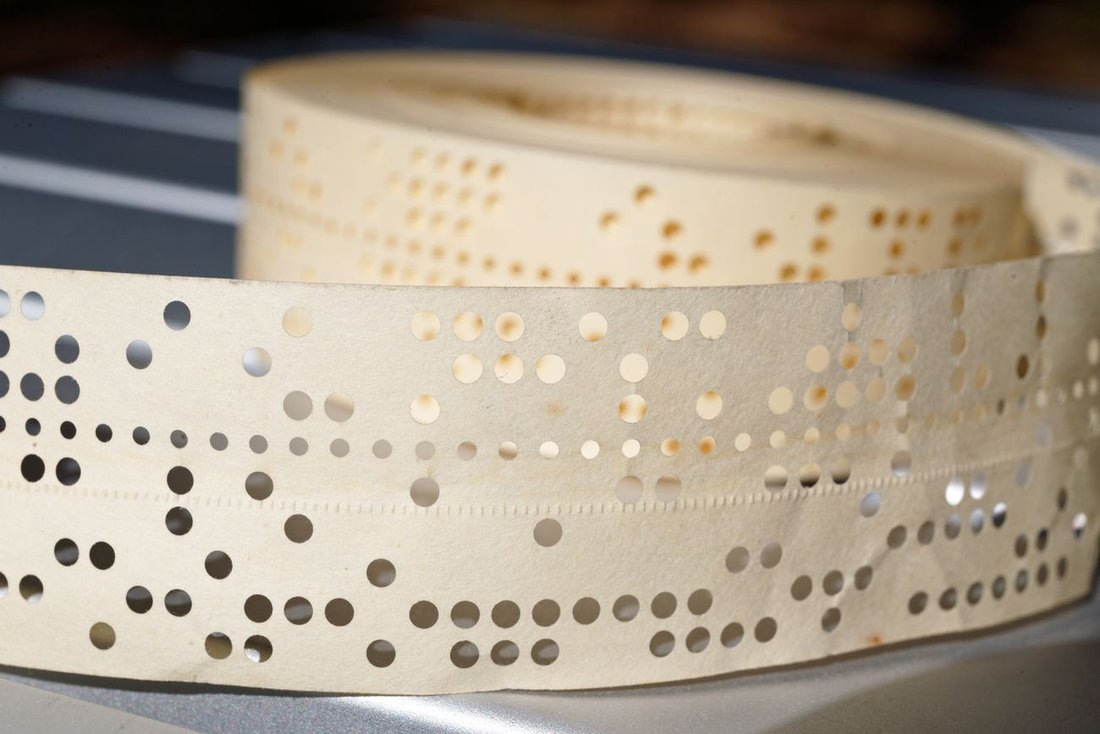
There is something about punched tape that no screen has ever replaced for me. A message on paper tape is physical and permanent and honest: the holes are either there or they aren’t, you can read them by eye, you can hold a whole conversation in your two hands, and you can drop the reel in a drawer and read it again in fifty years. As a boy I held those pink ribbons up to the light knowing they were full of words; now I could actually read them, and it turns out the words were exactly as real as I imagined. The next dive takes the same five-bit code off the wire and onto the air — RTTY, radioteletype, where the tape and the teletype meet the transmitter.
2.5.1 Sources (Vol 2)
- Wikipedia, “Punched tape” — chad and chadless tape (U-shaped flap / trap-door so a typing reperforator can print; chadless jams optical readers); store-and-forward tape networks. https://en.wikipedia.org/wiki/Punched_tape
- Wikipedia, “Teleprinter” and “Teletype Model 28” — keyboard perforator, reperforator, typing reperforator; the transmitter-distributor as the tape reader that reads and serializes onto the line. Torn-tape relay: Teletype Corp. “Universal torn-tape system” (1962, archive.org) and navy-radio.com tape-relay documentation.
- Cross-link: Teletype, Tape & RTTY → Teletype Machines (the ITA2 code and the machines) and → RTTY on the Air (the same code by radio).