Paddles and Electronic Keyers · Volume 2
Paddles & Electronic Keyers — Vol 2: Adjusting, and the Keys You Save For
Two screws per lever, a clever trick with magnets, a keyer setting that lets you hear between your own dits — and a run of makers from the everyman Bencher to jeweler-grade brass.
2.1 Adjusting a paddle to your hand
A paddle has even less to adjust than a straight key, but the two settings it does have — per lever — decide everything about how it feels:
- Contact gap — how far each lever travels before it closes. Close spacing feels fast and light; wider spacing is more deliberate and forgiving.
- Spring tension — how hard each lever pushes back against your finger. Light for speed, firmer for control.
On a dual-lever paddle you set these independently for each lever, so you can tune the dit side and the dah side to your own asymmetric hand. There’s no universally correct setting — a good paddle is one you can dial in until it disappears under your fingers.
2.2 The magnet trick
On premium paddles you’ll find a lovely refinement: magnetic return instead of springs. Rather than a coil spring pushing each lever back to center, small magnets provide the restoring force. The payoff is real — a magnetic return can be tuned with extraordinary precision (micro-threaded adjusters), it gives a very smooth, light action well suited to close spacing, it holds its setting across big temperature swings, and it never suffers the slow fatigue a metal spring can. It’s one of the features that separates a $40 starter paddle from a $300+ jewel, and once you’ve used a good magnetic paddle the action is hard to give up. Begali and N3ZN, below, are the names most associated with it.
2.3 QSK: hearing between your own dits
A paddle and keyer come into their own when paired with QSK — full break-in keying. In QSK the transmitter flips the antenna back to receive in the tiny off-gaps between your own dits and dahs, so you can literally hear the band — and any station trying to break in — between your elements, without stopping. (The Q-signal QSK means exactly “I can hear you between my signals; go ahead and break in.”) It demands a rig that can switch transmit-to-receive in a few milliseconds, but with it, fast CW becomes a real-time conversation: you hear a caller the instant they answer your CQ and stop sending mid-word. It’s the closest Morse gets to talking. Distinguish it from semi-break-in (VOX-style), which only drops back to receive after a whole word or pause.
2.4 Weight: making the code heavier or lighter
One more keyer control worth knowing is weight (sometimes split into “weight” and “ratio” on high-end keyers). Standard Morse has a 3:1 dah-to-dit ratio with equal spacing. Weight lets you fatten or thin the keying away from that — heavier weighting makes the elements a touch longer and the gaps shorter, for a rounder, more solid-sounding note; lighter makes it crisper. Crucially, weight does not change your speed — the extra keyed time is stolen from the spacing, so your WPM stays put. It’s a subtle, personal seasoning, not a fix for anything.
2.5 The makers
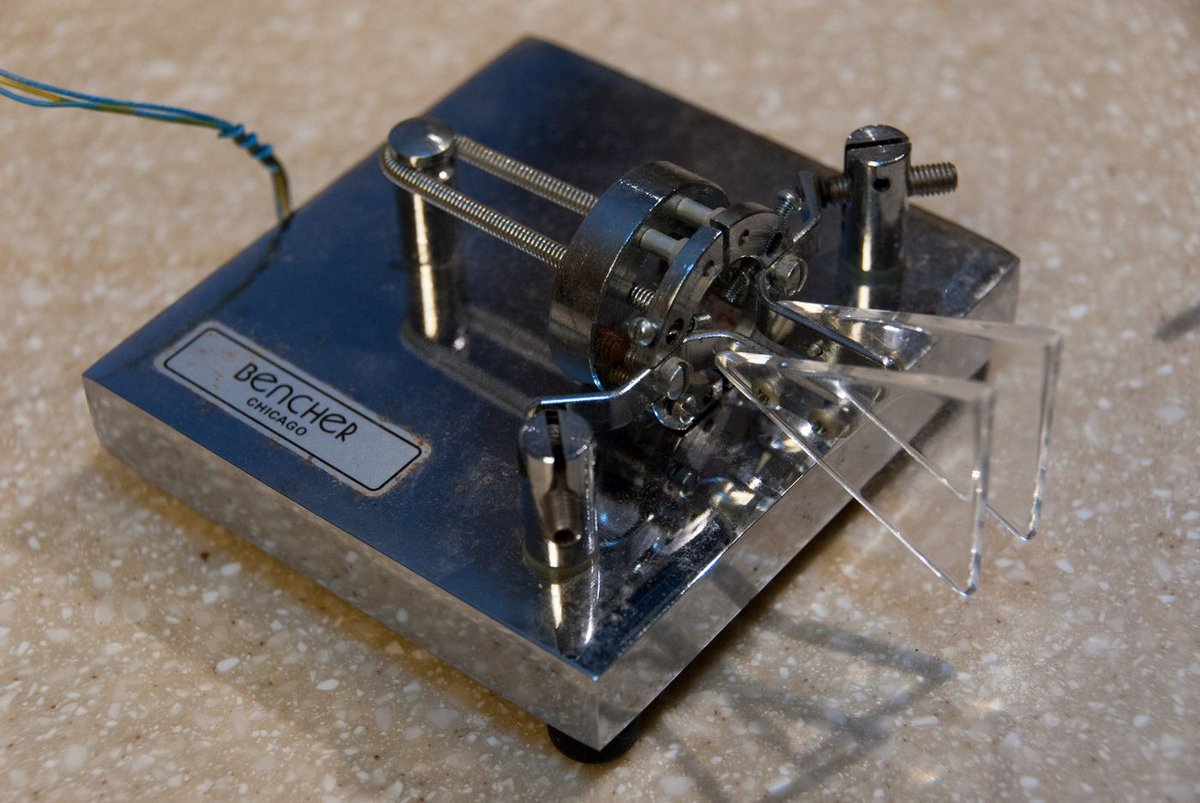
- Bencher — the BY-1 and BY-2, introduced in 1974, are the paddles most hams have owned. The BY-1 has a black powder-coated base, the BY-2 a bright chrome one; otherwise identical — a durable, adjustable, affordable dual-lever paddle, and the default first iambic paddle for two generations. (More than 100,000 sold; the Bencher amateur line is now made in the USA by Vibroplex.)
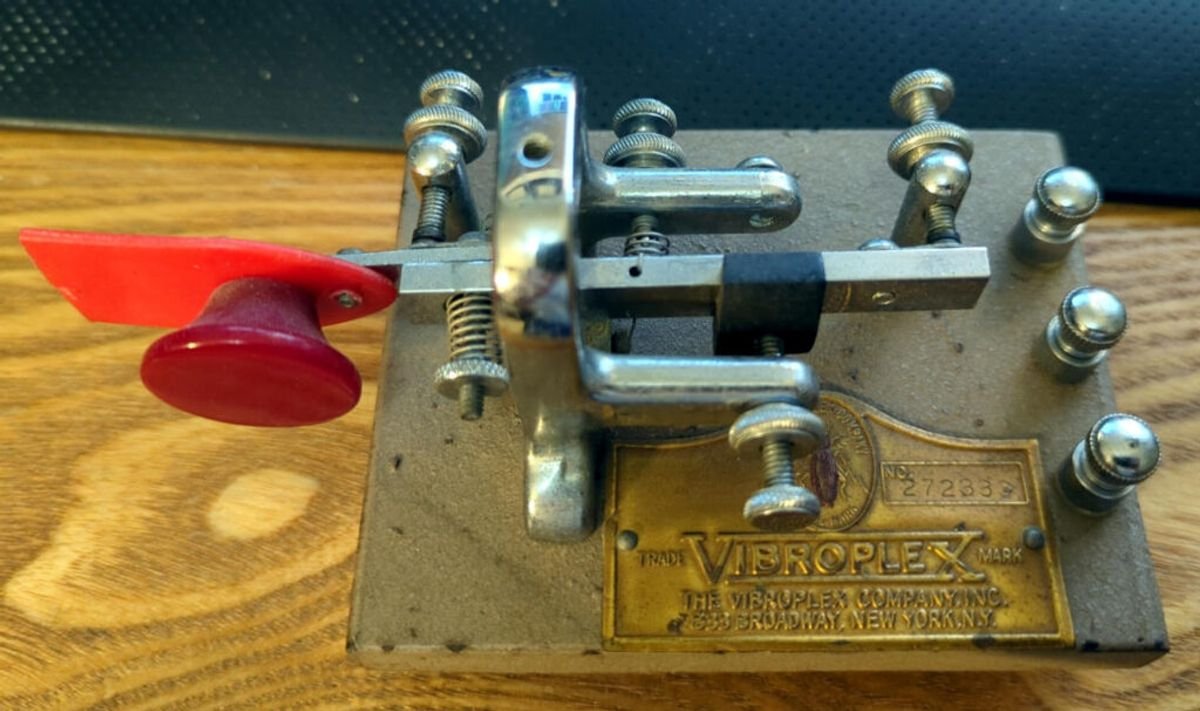
- Vibroplex Vibrokeyer — a lovely historical bridge: the first single-lever paddle for amateur radio, from 1960, and literally a Vibroplex bug frame with the pendulum removed. Set one next to a bug and you can see the family resemblance instantly — the same base and casting, the mechanical dit-maker simply deleted and its place taken by a plain contact. Vibroplex followed it with iambic “Standard” and deluxe paddles in the 1970s.
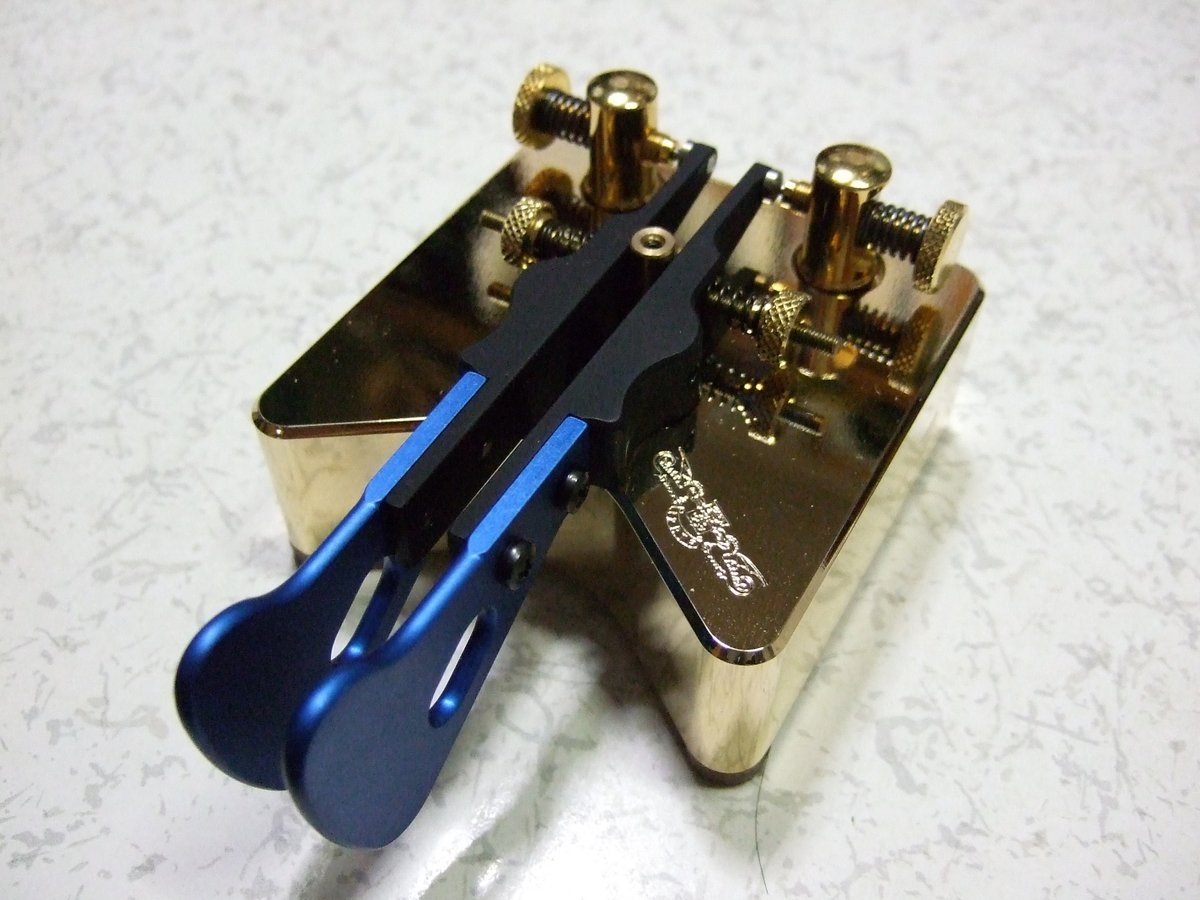
- Begali (Italy) — Pietro Begali’s jeweler-grade paddles: the mirror-polished stainless Sculpture, the magnetic-return Signature and Magnetic Classic, each signed and certified. The high end of the art.
- N3ZN (USA) — Tony Baleno’s hand-machined paddles: ball-bearing pivots, magnetic return, solid-silver contacts, built to order in a rainbow of finishes. A modern classic among serious CW ops.
- The rest of the bench — GHD (Sendai, Japan) and Kent (England) both make fine keys and paddles; Hi-Mound (the UFO’s maker) offers paddles too; and for going portable there are the tiny machined minis from American Morse Equipment (the Porta Paddle, California) and Palm Radio (Germany) that clip to a pocket rig in the field.
2.6 Where the paddle sits in the story
The paddle is the point in this whole ladder where the operator finally hands the element timing entirely to electronics while keeping the choices — which element, when, how fast. It’s more automated than a bug and less than a memory keyer, and for most modern CW operators it is simply the way to send: fast, light, clean, and endlessly adjustable to the hand. And because a paddle is small and precise and made to be handled for years, it’s also where the makers turned the input device into something close to jewelry — which, brass-lover that I am, I consider entirely the right instinct. Whatever key you start on, a good paddle in front of a good keyer is where a lot of CW operators end up living. It is where I do.
2.6.1 Sources (Vol 2)
- Bencher/Begali/N3ZN/American Morse maker documentation — per-lever gap and spring adjustment; magnetic return (precision, smoothness, temperature stability, no spring fatigue). i2rtf.com (Begali) · n3znkeys.com · americanmorse.com/portapaddle.htm
- Bencher BY-1/BY-2 (1974, >100k, now made by Vibroplex) and the Vibroplex Vibrokeyer (1960, first single-lever paddle, a bug frame minus the pendulum): vibroplex.com. Makers GHD/Kent/Hi-Mound/Palm Radio confirmed from their pages.
- QSK / full break-in: Wikipedia “QSK operation (full break-in).” Weight/ratio (deviation from 3:1, does not change WPM): K1EL WinKeyer datasheet; pe1hvh Morse weighting notes.
- Keyer-chip history (Curtis, Mode A/B, memory keyers) cross-referenced to Keys & Keyers → The Hi-Mound UFO & the Autokeyer Era.