Modern Digital and the Raspberry Pi · Volume 1
Modern Digital & the Raspberry Pi — Vol 1: The Terminal Unit Becomes a Program
The rack of filters and the clattering teleprinter collapsed into a soundcard and a few lines of DSP. Here is how the whole terminal unit became software — and how a weak-signal mode called FT8 quietly took over the bands.
1.1 The room in a program
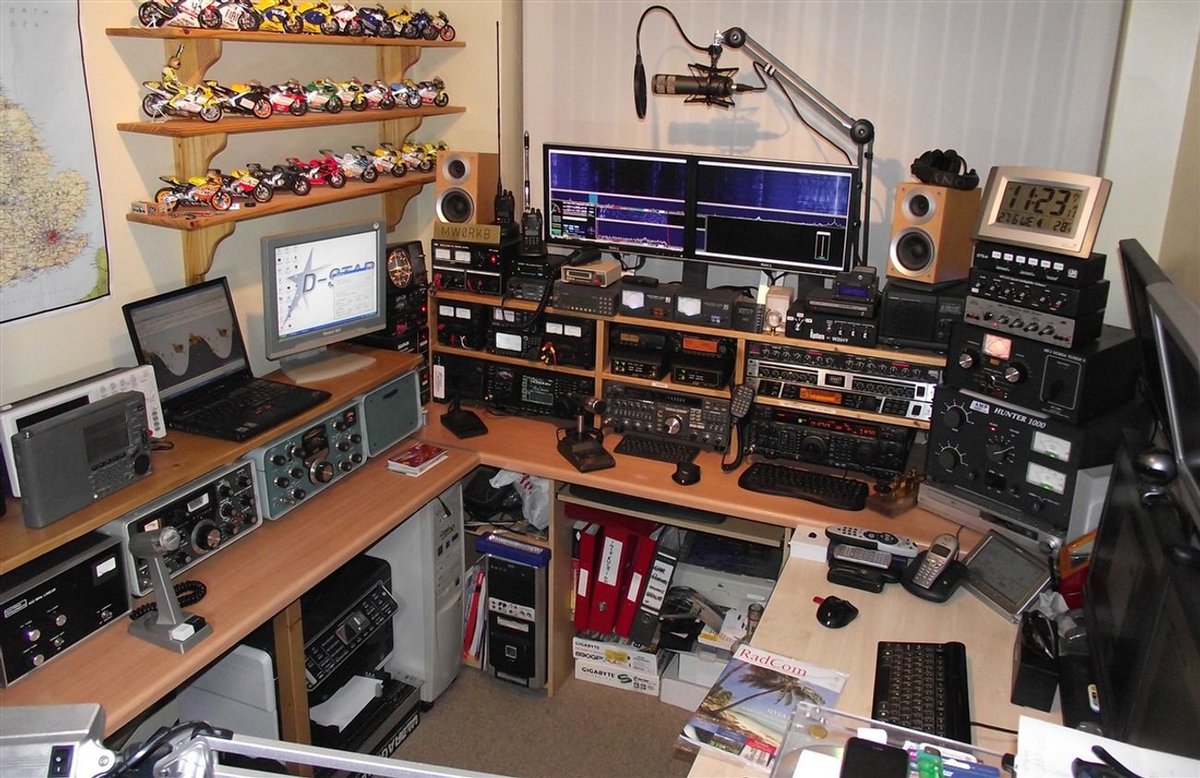
Go back to the RTTY dive and picture the station: a receiver, a boxy terminal unit full of filters, a green tuning scope, and a clattering Model 15 in the corner. Now erase all of it except the receiver, and replace it with a laptop and a small USB box. That’s where amateur digital modes are today. The mark and space filters, the limiter, the slicer, the whole terminal unit — they’re now a few hundred lines of DSP running on an ordinary computer’s soundcard, and the teleprinter is a window on a screen. Everything the old iron did, software does, and it does far more. This dive is how that happened, and (in Volume 2) how a $35 Raspberry Pi became a complete ham station — closing the whole story that started with Morse’s brass key.
1.2 The software terminal units
The demodulator you used to build or buy is now a free download:
- MMTTY — Makoto “Mako” Mori (JE3HHT)‘s classic RTTY engine: a soundcard does the DSP demodulation of the two RTTY tones and generates them for transmit. It’s the gold standard for RTTY decoding — though it’s Windows-only (worth knowing before you reach for a Pi).
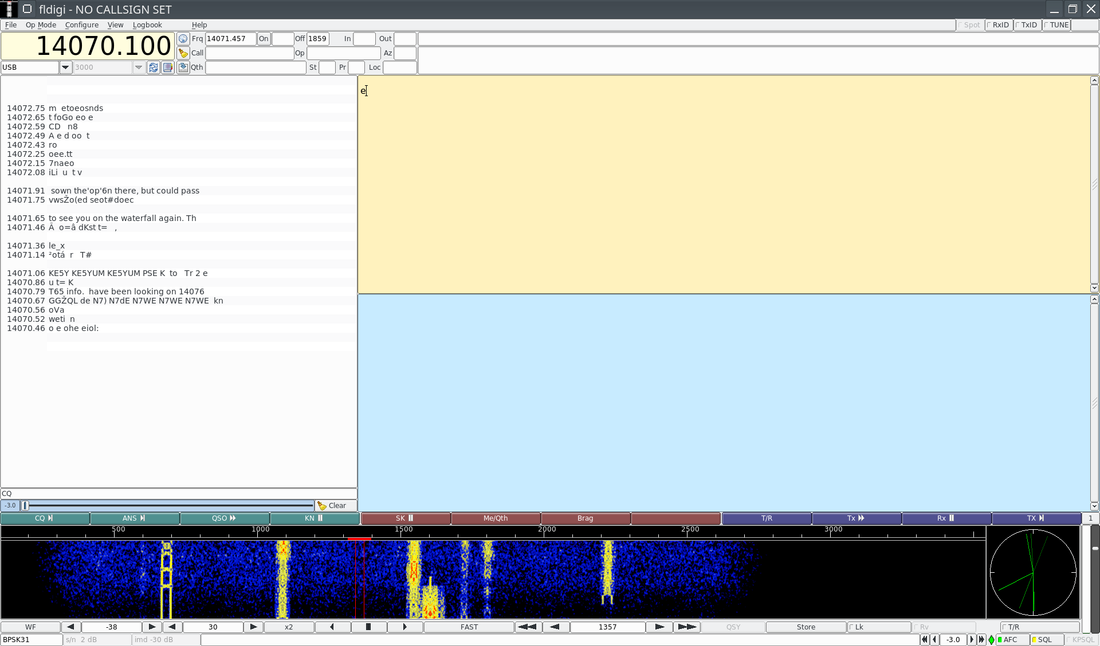
- fldigi — Dave Freese (W1HKJ)‘s “Fast Light Digital Modem Application”: turns your soundcard into a multi-mode DSP modem — RTTY, PSK31, MFSK, Olivia, CW, and more — and it’s cross-platform, running happily on Windows, macOS, Linux, and the Raspberry Pi.
- DM780 — the digital component of Ham Radio Deluxe, decoding and logging a dozen-plus modes.
All of them do the same fundamental thing the ST-6 did with op-amps and toroids — pull mark-and-space (or PSK phase, or FT8 tones) out of receiver audio — just in math instead of hardware.
1.3 The one piece of hardware left: the interface
Software needs the radio’s audio, and the radio needs the software’s audio, so between them sits the one box that survived: a USB soundcard interface (Figure 1). It carries receive audio into the computer, transmit audio out to the radio, and keys the transmitter (PTT); the better ones also carry CAT rig control and FSK keying.
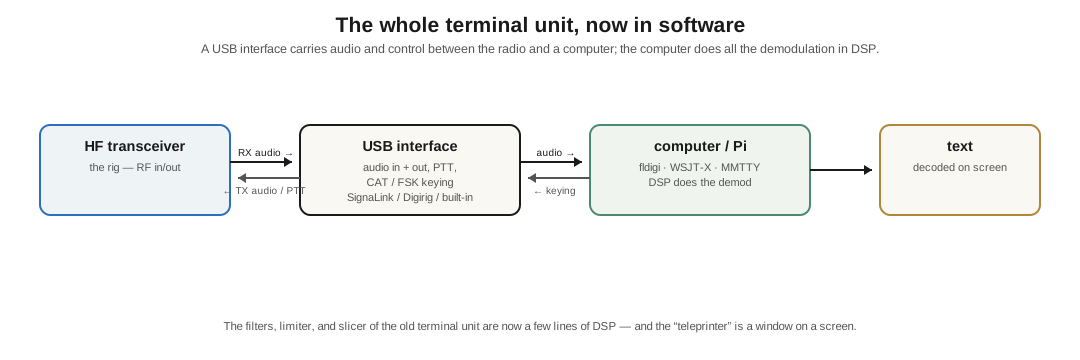
The classics: the SignaLink USB (Tigertronics), a self-contained, transformer-isolated audio interface with relay PTT (it does audio and PTT, but not CAT rig control — a common gotcha); the Digirig, a tiny box that adds CAT/serial control; and the RIGblaster (West Mountain Radio). And increasingly there’s no box at all: most modern transceivers now have a built-in USB soundcard, so a single cable to the computer does everything.
1.4 FT8: the mode that took over
Here’s the honest turn in the story, and it’s a big one. The old modes — RTTY, and the PSK31 that Peter Martinez (G3PLX) introduced in 1998 — have been largely swept aside on HF by a mode called FT8, released in 2017. It comes from the WSJT-X suite by Steve Franke (K9AN) and Joe Taylor (K1JT) — the “FT” is Franke-Taylor, the “8” is 8-tone FSK — and it is a different animal entirely.
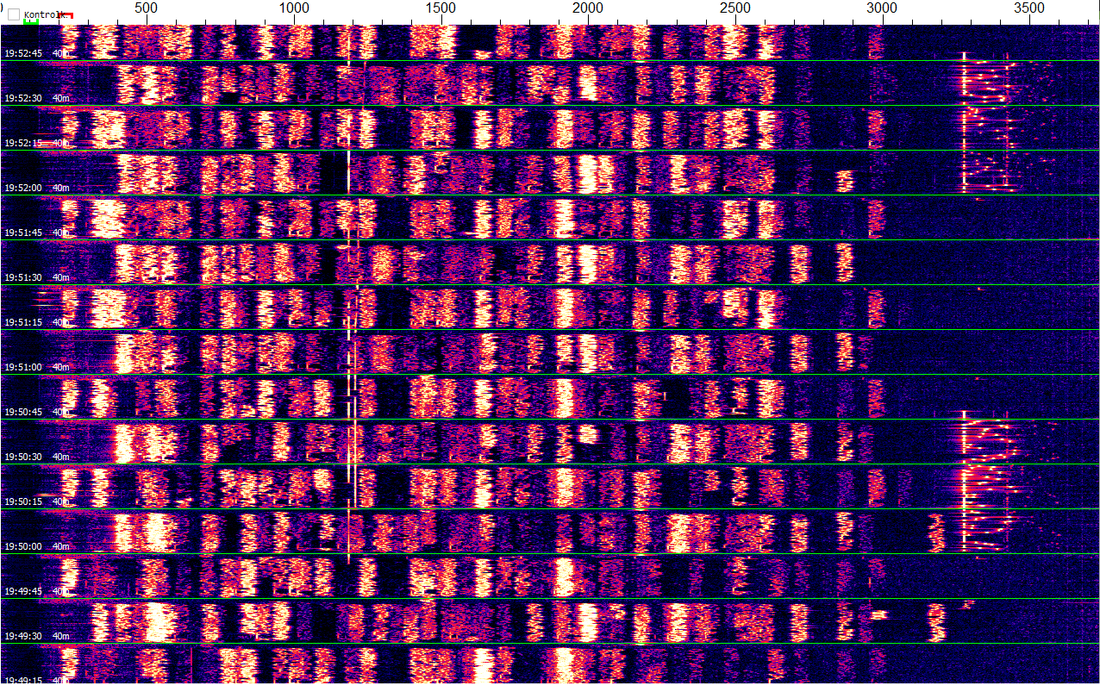
FT8 is a weak-signal, highly-automated mode. It sends tightly-coded messages in 15-second slots (the transmission itself is 12.64 seconds of the slot), using 8 tones and heavy forward-error-correction, and it can be decoded at signal levels far below what a human ear or a RTTY machine could ever copy — roughly 20 dB into the noise. The trade is that it’s rigid and automatic: you’re not ragchewing, you’re exchanging callsigns, grids, and signal reports with a station you often can’t even hear. For chasing DX with a modest antenna, it is miraculous, and it now carries a huge share of HF digital activity. RTTY survives in contests; casual digital DXing has gone to FT8.
A Nobel footnote — and a common myth. Joe Taylor, K1JT, is a Nobel laureate in Physics (1993) — but for the discovery of the binary pulsar and its confirmation of gravitational radiation, not for FT8. It’s a lovely fact that the mode filling the bands today was designed by a Nobel physicist; just don’t credit the Nobel to the ham mode.
Volume 2 brings it home: the Raspberry Pi as a whole ham station, software that decodes CW (imperfectly — the human ear still wins on a swinging fist), the little OLED Morse trainer you can build yourself, and the close of the whole arc from a hand on a brass key to a $35 computer.
1.4.1 Sources (Vol 1)
- fldigi (W1HKJ, “Fast Light Digital Modem,” multi-mode, cross-platform incl. Raspberry Pi): Wikipedia “Fldigi.” MMTTY (JE3HHT, Windows RTTY engine): hamsoft.ca. DM780 (Ham Radio Deluxe): hamradiodeluxe.com. https://en.wikipedia.org/wiki/Fldigi
- Interfaces: SignaLink USB (Tigertronics — audio + PTT, not CAT), Digirig (adds CAT), RIGblaster (West Mountain Radio); modern rigs’ built-in USB soundcards. tigertronics.com · digirig.net · westmountainradio.com
- FT8 (2017; Franke K9AN + Taylor K1JT; 8-FSK; ~15 s slots / 12.64 s TX; weak-signal ~−20 dB; part of WSJT-X; displaced RTTY/PSK31) and PSK31 (1998, G3PLX): Wikipedia “FT8,” “WSJT-X,” “PSK31.” Joe Taylor’s 1993 Nobel (binary pulsar, not FT8): nobelprize.org. https://en.wikipedia.org/wiki/FT8