Learning and Operating CW · Volume 2
Learning & Operating CW — Vol 2: Working the World with a Key
What actually happens on the air: calling CQ, the exchange, the reports, the clubs — and why, in the age of FT8, a hand on a brass key is still the thing I reach for.
2.1 Making a contact
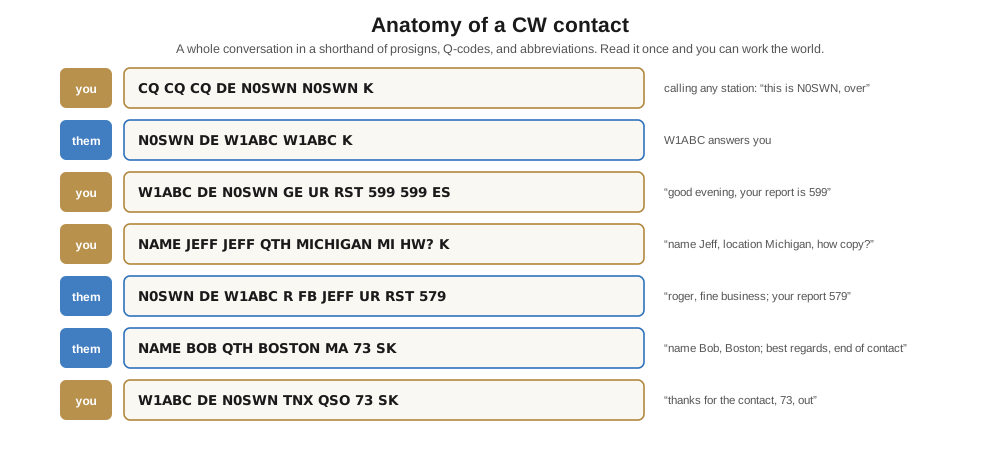
Once the code is in your head, the reward is the QSO — a contact — and it’s a beautifully compact ritual (Figure 1). You call CQ (“seek you,” a general call to anyone): CQ CQ CQ DE N0SWN N0SWN K — “calling any station, this is N0SWN, over” (DE is “from,” K is “any station, go ahead”). Someone answers with your call and theirs, and then you trade the essentials: a signal report, your name, and your QTH (location), all in the dense shorthand of prosigns, Q-codes, and abbreviations from the Code & Abbreviations dive.
2.2 RST: the report in three digits
The signal report is the RST system (devised by Arthur Braaten in 1934), three digits for three things:
- R — Readability, 1 to 5 (can I make out your words?)
- S — Strength, 1 to 9 (how strong is your signal?)
- T — Tone, 1 to 9 (how clean and musical is your keyed note? — this digit is CW-only; voice reports drop it)
So a perfect CW signal is “599” — perfectly readable, full strength, pure tone. (In contests “599” is often just a courtesy reflex rather than a literal measurement — everybody’s a 599 when you’re going fast.)
2.3 The three ways to enjoy it
CW operating has three broad flavors, and most operators love at least one:
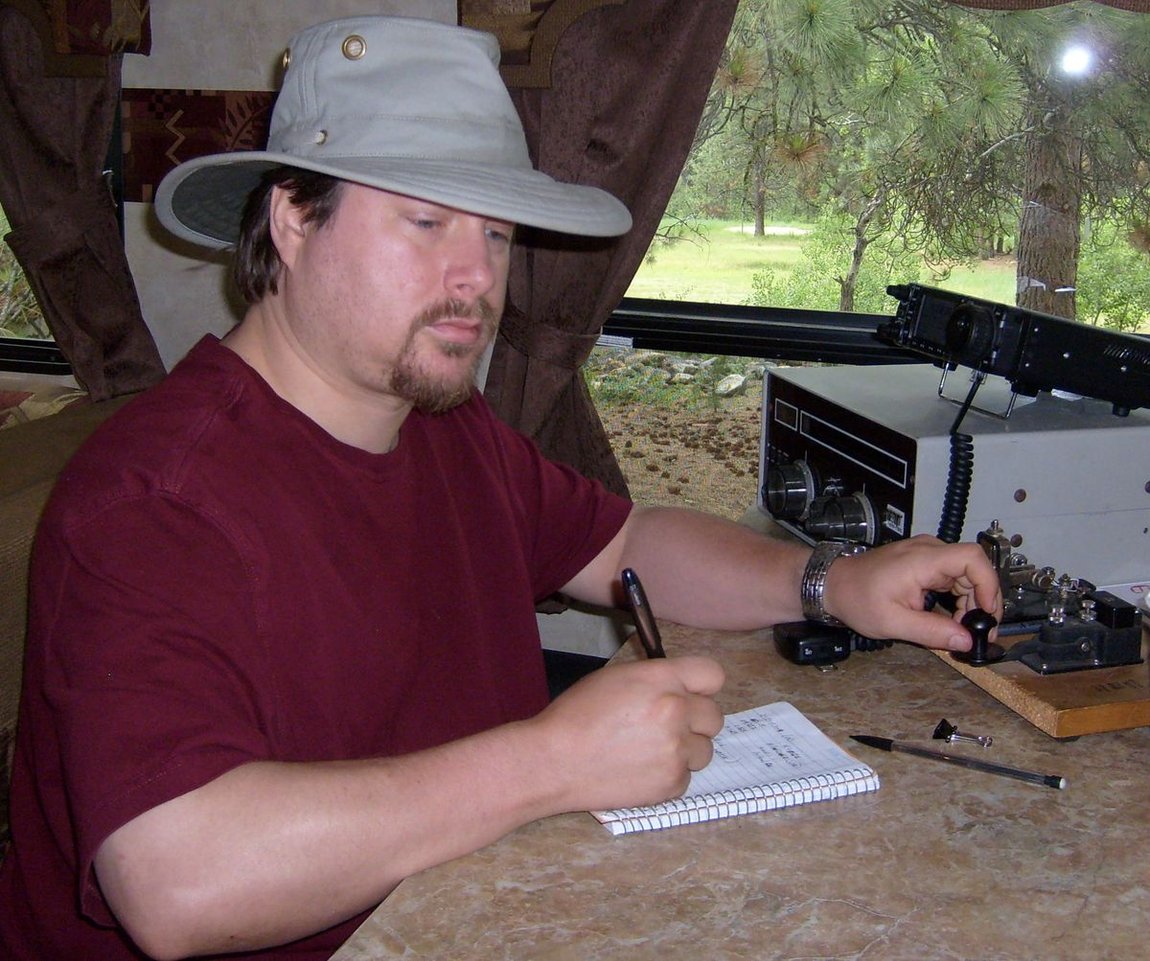
- Ragchewing — a real, relaxed conversation: weather, rig, antenna, the day. This is where head copy pays off, and where the fist becomes a friend you recognize.
- Contesting — speed and volume, exchanging brief reports with as many stations as possible in a weekend. RTTY and CW contests are huge, and a fast CW contester is a thing to hear.
- DXing — chasing distant and rare stations, sometimes through pileups of hundreds of callers. CW’s efficiency makes it a favorite for working weak, faraway DX.
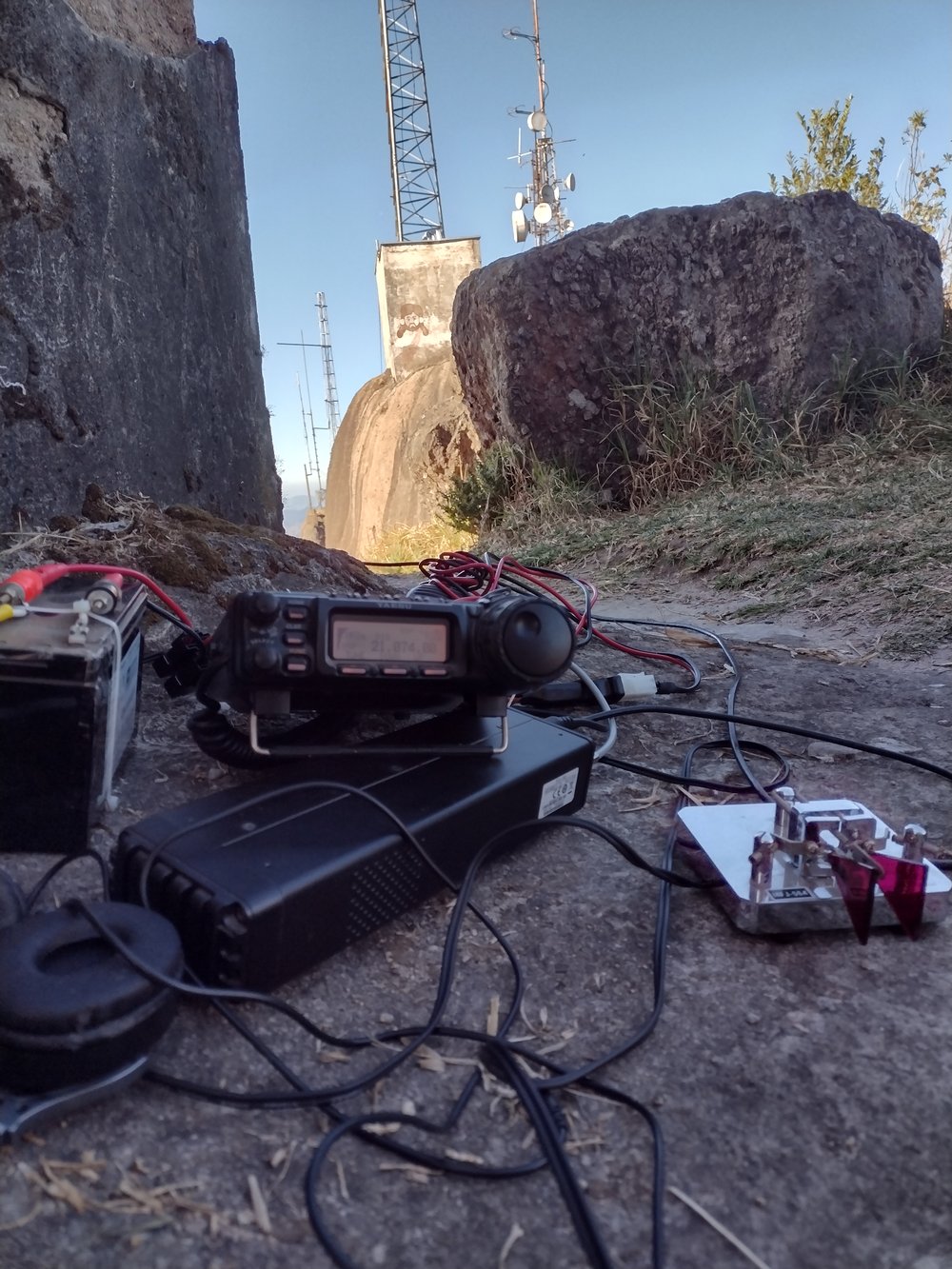
And a special corner: QRP — operating at very low power, 5 watts or less on CW. There’s a real thrill in crossing an ocean on the power of a nightlight, and CW’s efficiency is what makes it possible. Full break-in (QSK) — hearing the other station and the band between your own dits and dahs — turns fast CW into something close to a real-time conversation.
2.4 The community that kept it alive
When the code test ended in 2007, some predicted CW would die. Instead it’s thriving, tended by clubs that exist purely for the love of it: CWops (the CW Operators’ Club, and its free CW Academy), FISTS (the International Morse Preservation Society, since 1987), and the SKCC — the Straight Key Century Club, tens of thousands of members who operate only with mechanical keys, straight keys and bugs. And once a year, on Straight Key Night (an ARRL event every New Year, UTC), tens of thousands of hams put the electronic keyers away and send by hand, just for the joy of it. The machines never killed the craft.
2.5 Why I still reach for the key
I owe you an honest word, because I’ve been honest all through this project. For pure weak-signal work — pulling a signal out of the noise floor when nothing else will get through — CW is no longer the champion. Since about 2017, the software mode FT8 decodes signals far below what even a trained ear can copy, and it now carries most marginal DX. That’s real, and I won’t pretend otherwise.
But CW’s advantage was never only machine sensitivity. It’s physics — a CW signal is a hundred times narrower than a voice signal, so it admits a hundredth of the noise, which is why a trained ear can still pull it out of a band that’s too rough for SSB, on a fraction of the power. And it’s something FT8 can never offer: CW is a human skill, a craft, a conversation between two people’s hands and ears. When I sit down at a straight key on a quiet night and send CQ, and a stranger a thousand miles away answers in a fist I’ll come to recognize, I am doing exactly what a brass-pounder did in an 1880 railroad depot, what my father did in his shack, what Morse and Vail imagined in 1844 — turning thought into a pattern of ons and offs and sending it, hand to ear, to another human being.
That is the whole of Dots & Dashes, in the end. Fifteen dives, 180 years, brass keys and chrome autokeyers and clattering teletypes and pink paper tape and green crossed bananas and a little Raspberry Pi — and underneath all of it, one boy in a shack who finally learned to read the dots and dashes, and never got over how wonderful they are.
73 de N0SWN.
2.5.1 Sources (Vol 2)
- CQ format and the CW QSO exchange (RST, name, QTH): electronics-notes.com “CW QSO.” RST system (Braaten 1934; R 1–5, S 1–9, T 1–9; tone digit CW-only): Wikipedia “R-S-T system.”
- QSK (full break-in) and QRP (≤5 W CW): Wikipedia “QSK operation”; ARRL “QRP.” Clubs: CWops (2010), FISTS (1987), SKCC (2006); ARRL Straight Key Night (Jan 1 UTC). cwops.org · skccgroup.com · arrl.org.
- CW’s weak-signal advantage (narrow bandwidth = less noise; real physics) and the honest FT8 caveat (FT8, ~2017, now dominates machine weak-signal DX): ARRL “weak-signal modes”; cross-link Teletype, Tape & RTTY → Modern Digital & the Raspberry Pi.