Learning and Operating CW · Volume 1
Learning & Operating CW — Vol 1: Learning the Code
There is a right way and a wrong way to learn Morse, and the wrong way is the one almost everyone tries first. Here is how to actually get it into your head — and the story of how I did, starting in my father's shack.
1.1 The boy who couldn’t read it
I have said it in nearly every dive of this project, because it’s true and it’s where all of this comes from: I grew up in my father’s ham shack in the late 1960s and early ’70s, and I would sit there for hours listening to the Morse code come out of the speaker — and I could not read a word of it. I knew it was a language; I could hear that grown men were having conversations in it, fast, effortless, across the whole world. But to me it was just beautiful noise. Learning to turn that noise into words was one of the quiet ambitions of my life, and eventually — as N0SWN — I did it. This dive is about how, because there’s a right way and a wrong way, and the difference matters enormously.
1.2 The wall almost everyone hits
Here’s the trap (Figure 1). The natural way to learn Morse is to memorize a chart — A is dot-dash, B is dash-dot-dot-dot — and then decode incoming code by counting the dits and dahs and looking each letter up in your head. It works… to about 10 words per minute. Then you hit a wall, hard, and you cannot get past it no matter how much you practice, because counting doesn’t scale. At 15 or 20 WPM the letters come faster than you can count and look them up, and the whole method collapses.
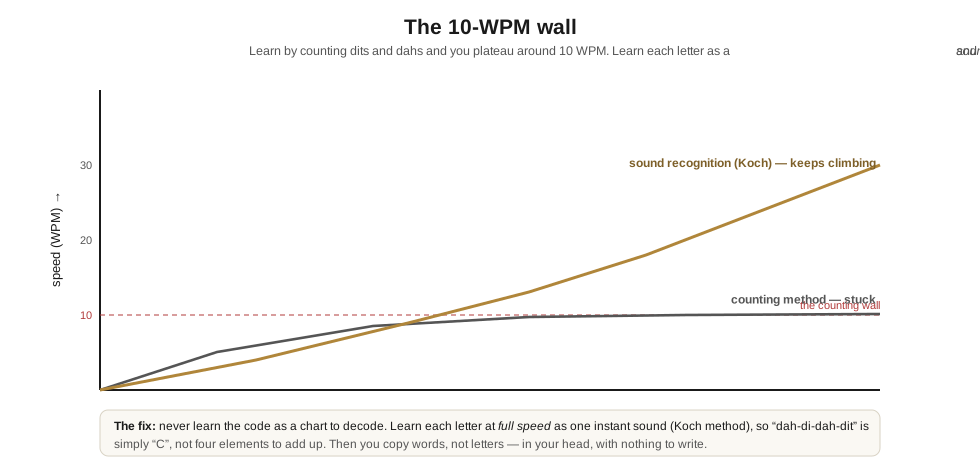
The fix is to never learn it as a chart at all. You have to learn each letter as a single, instantaneous sound — so that “dah-di-dah-dit” isn’t four elements you add up, it’s just “C,” the way you hear a spoken word without spelling it. Once each character is a reflex sound, you stop copying letters and start copying words, in your head, with nothing to write down. That’s called head copy, and it’s the goal.
1.3 The Koch method: full speed from the start
The best-proven way to build those sound-reflexes is the Koch method, and it’s counterintuitive. It was devised by Ludwig Koch, a German researcher (an engineer, actually, whose work ran in a psychology journal), and published in 1936 — but it couldn’t really be used until computers existed to run it. The method:
- Start at your full target speed — Koch used around 20 WPM character speed — right from lesson one. This is the key: at full speed you cannot count, so your brain is forced to learn the sound.
- Begin with just two characters. Copy them until you’re getting 90% correct.
- Then add one new character, get back to 90%, add another — building up all forty characters one at a time, always at full speed.
Because the characters are always at speed, you never build the counting habit that causes the wall. (Pair it with Farnsworth timing from the Code & Timing dive — full-speed characters, stretched gaps — and you have thinking room while still learning the true sound of each letter.)
1.4 The tools — and building your own
When I was a boy the only way to learn was a code-practice oscillator and a patient Elmer. Today it’s wonderfully easy:
- LCWO (“Learn CW Online,” lcwo.net) — a free, browser-based Koch trainer written by Fabian Kurz (DJ5CW, formerly DJ1YFK). It’s where most people start now, and it’s excellent.
- G4FON’s Koch CW Trainer — the classic Windows Koch-method program.
- Phone apps — dozens, for practice on the bus.
- CW Academy — free, instructor-led classes run by CWops (the CW Operators’ Club), which will take you from zero to on-the-air with a real human coach.
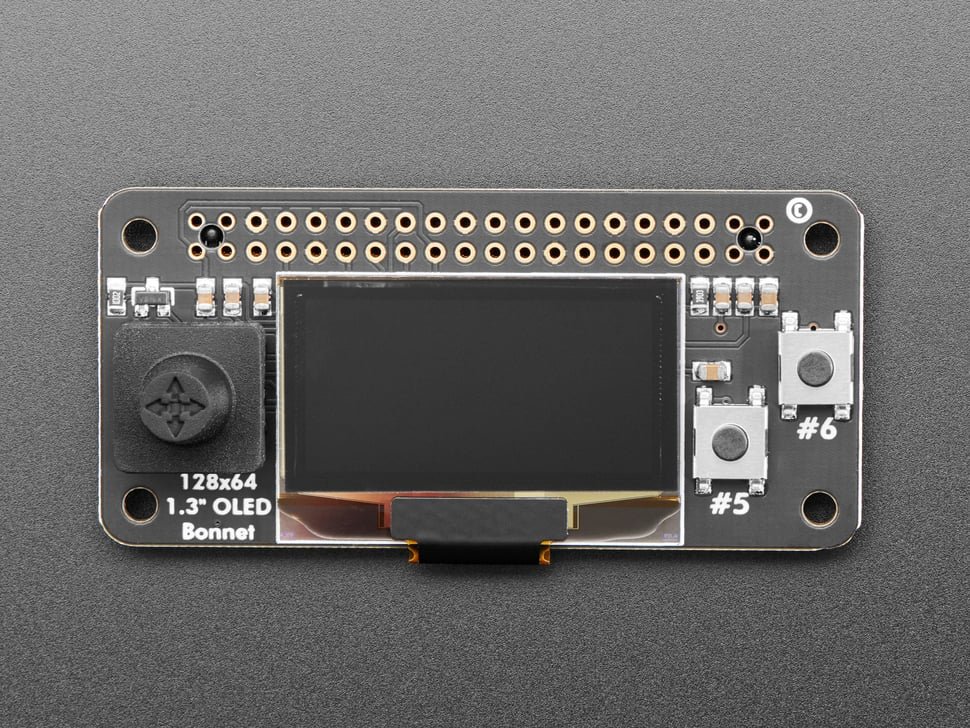
And, in the spirit of this whole project, you can build your own trainer — the OLED Morse decoder from the Building Your Own Keys dive, a microcontroller and a little screen that listens to your sending and reads it back to you, showing you exactly where your fist is sloppy.
1.5 The code test that came and went
For most of the history of amateur radio, you could not get on the HF bands without proving you could copy Morse. The US license required a code test at 5 WPM (Novice/Technician), 13 WPM (General), and 20 WPM (Amateur Extra) — a real barrier that kept plenty of people off the air, and a rite of passage for those who cleared it. Then the FCC dismantled it in two steps: the 2000 restructuring (WT Docket 98-143) collapsed all three to a single 5 WPM test (effective 15 April 2000), and the R&O FCC 06-178 dropped the Morse requirement entirely, for every license class, effective 23 February 2007.
A friendly civil war followed — the “no-code” hams versus the traditionalists — and it has mostly faded, for a simple reason: the people who love the code never needed a rule to make them learn it. I didn’t learn Morse to pass a test. I learned it because of a boy in a shack in 1970 who wanted, more than almost anything, to understand what those dots and dashes were saying. Volume 2 is the payoff — actually operating: calling CQ, working a station across the world, and why, in an age of FT8, I still reach for the key.
1.5.1 Sources (Vol 1)
- The Koch method (Ludwig Koch, 1936; full target speed, 2 characters, add at ≥90% copy) and the counting plateau (~10 WPM): Wikipedia “Morse code”; Long Island CW Club Koch summary; morsecode.ninja. ⟨Koch held an engineering doctorate; often loosely called a “psychologist”⟩ https://en.wikipedia.org/wiki/Morse_code
- Head copy: lidscw.org. Tools: LCWO (Fabian Kurz, DJ5CW ex-DJ1YFK), G4FON, CW Academy / CWops. lcwo.net · cwops.org. The DIY OLED trainer: cross-link Building Your Own Keys.
- FCC code-test history: single 5 WPM test WT Docket 98-143 effective 15 Apr 2000; Morse eliminated FCC 06-178 (WT Docket 05-235) effective 23 Feb 2007. fcc.gov; Wikipedia “Amateur radio licensing in the United States.” Cross-link: Morse & CW → The History of Morse Code (the same dates).