Antique Telegraph Keys and Brass Pounders · Volume 2
Antique Telegraph Keys & Brass-Pounders — Vol 2: The Brass Pounders
The keys were only half of it. The other half was a profession of fast hands and faster ears — tramp telegraphers, women operators, railroad dispatchers, and a young Thomas Edison — who read lightning off a wire for a living.
2.1 A profession at the end of a wire
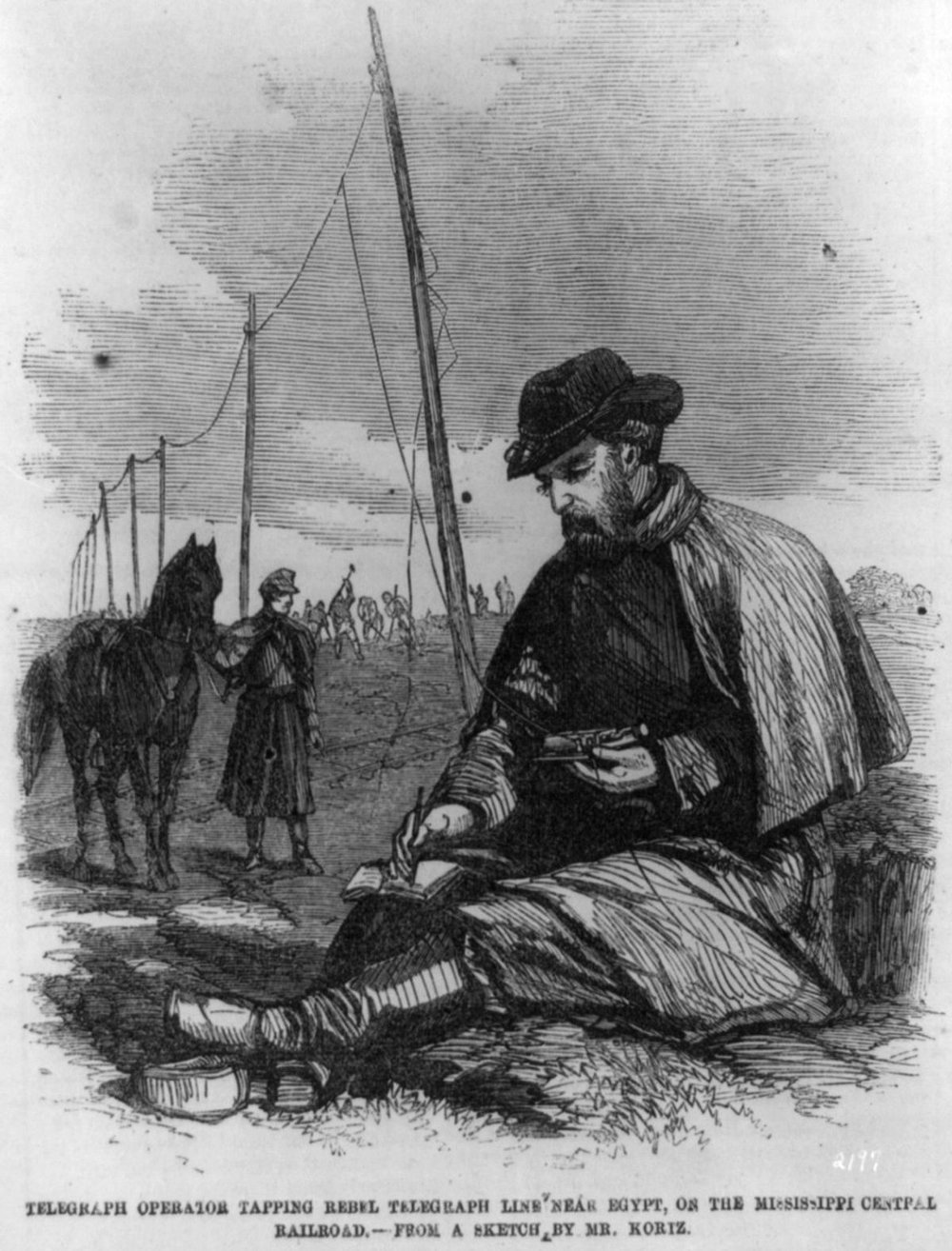
A telegraph key is an inert piece of brass until a trained hand takes it up, and the 19th century built an entire profession around that hand. They called themselves — and were called — brass pounders, from pounding the brass key all day, and out on the frontier lines, lightning slingers. (The term “brass pounder” is often assumed to mean a ship’s radio operator; it doesn’t — it was born on the landlines and only later followed Morse to sea.) Being a first-rate operator meant sending a clean, even fist and, harder, reading fast code by ear off a clacking sounder, hour after hour, and getting every word right. It was skilled, relatively well-paid, and — for its era — surprisingly open work.
2.2 How fast, and how good
A trained hand operator worked at roughly 25 to 40 words per minute; the elite — the “first-class” operators who handled the press wire, taking down news copy live for the newspapers — pushed 40 to 50 wpm by ear, continuously, for a full shift. (Higher numbers you’ll see usually refer to short bursts of receiving, not sustained sending.) Reading press at speed was the top of the craft, and it’s why the fastest men and women drifted toward the newspaper offices and the big-city relay rooms. To feed that speed, operators used a brutal shorthand — the Phillips Code, compiled in 1879 by Walter P. Phillips of the Associated Press: hundreds of abbreviations that let a press operator keep up with a torrent of words. (A couple of Phillips’s abbreviations outlived the wire entirely — POTUS and SCOTUS started life as telegraph shorthand.)
2.3 The tramp telegrapher: young Edison
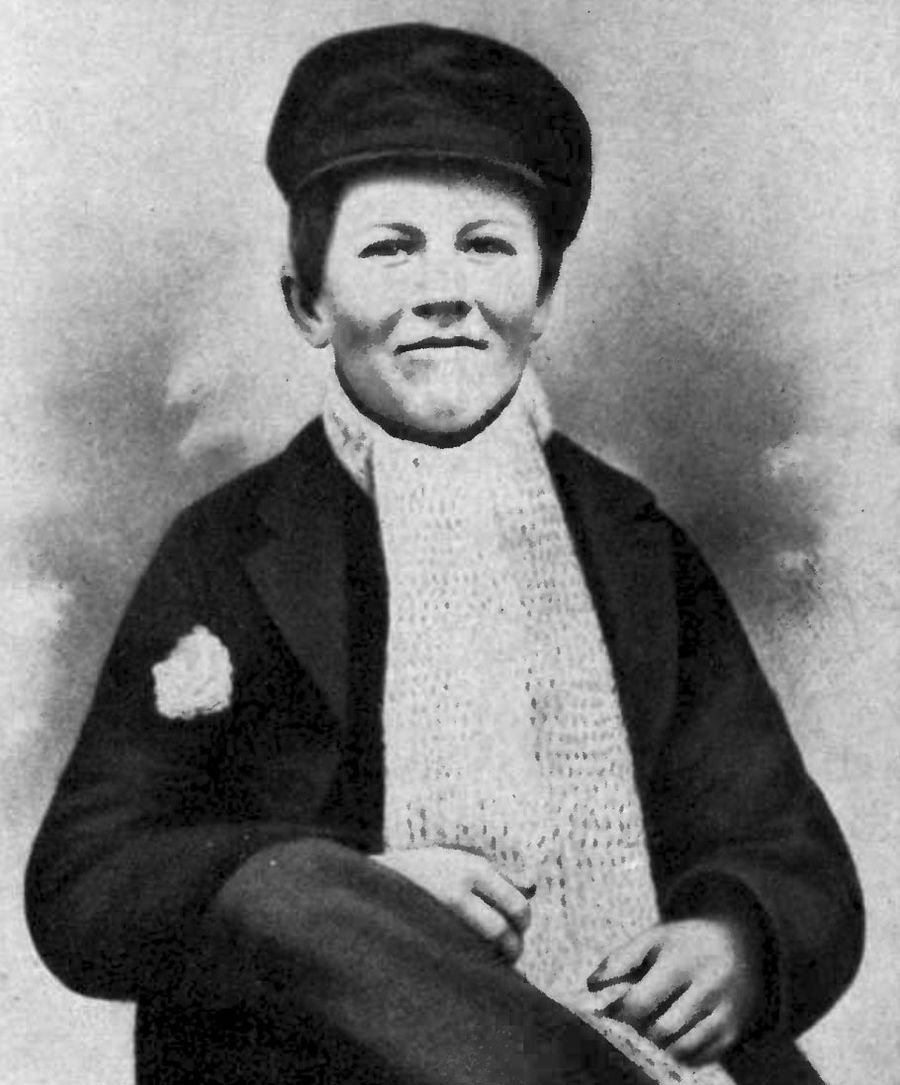
The most famous brass pounder of all was a young man who used the job as a travelling laboratory. From about 1863 to 1867, before he was an inventor of anything, Thomas Edison worked as an itinerant “tramp telegrapher,” drifting from office to office across the Midwest, the South, and Ontario, taking the unpopular night shifts, and — importantly — he was genuinely good, fast enough to take press copy. He spent his idle hours on the night shift tinkering with the instruments, and his very first inventions were telegraph inventions: the duplex and quadruplex systems that sent multiple messages down one wire. The key on the table was Edison’s first laboratory.
2.4 The women on the wire
Telegraphy was, for the 19th century, an unusually open profession for women. Sarah Bagley is cited as the first US woman telegraph operator, in 1846 — barely two years after the first line — and the Civil War labor shortage opened the work widely; by the 1870s women operators were common. As the historian Thomas C. Jepsen put it, telegraphy admitted women “before its gender roles had solidified.” It was skilled, respectable, comparatively well-paid work at a time when little else open to women was — though not without its fights: unequal pay was a live grievance, and women operators were part of the great 1870 Western Union strike and its demands for equal pay. The image of the lone woman operator running a small depot office is not a romantic invention; it was a real and common career.
2.5 The telegraph that ran the railroads
Nowhere did the key matter more than on the railroad. Charles Minot of the Erie Railroad first used the telegraph to route trains in 1851, and within a couple of decades the telegraph was how railroads ran. The depot agent-operator — often the only railroad employee in a small town — sat at a key and copied train orders sent by a distant dispatcher, reported each train as it passed, and threw the siding switches, making it possible for two trains to safely meet and pass on a single track. That same operator usually doubled as the town’s freight agent, passenger-ticket agent, Western Union office, and Railway Express counter. The lonely depot with its clattering sounder and its green-shaded lamp is one of the enduring images of American railroading, and it ran on a brass key.
2.6 The fist, and the bridge to radio
Two last things the brass pounders left us. The first is the “fist.” Because every operator’s sending had an individual rhythm — “clear,” “nervous,” “staccato” — experienced operators could recognize a specific colleague on the wire by fist alone, as surely as by handwriting. That phenomenon carried straight from the landlines into radio, where in WWII it became a tool of traffic analysis — identifying enemy operators by their Morse fist. Every time I mention a “good fist” in the CW dives, I’m using a word the brass pounders coined on iron wire.
The second is the bridge to us. When wireless arrived, it inherited the landline’s whole culture — the code (reformed for radio), the operating shorthand, the fist, and the physical key itself. The surplus and tradition of the wire flowed directly into early amateur radio, and the lineage runs unbroken through the WWII J-38 (descended from the 1920 Signal Corps “legless” J-30) to the key on my own desk. When I sit down at a straight key tonight and send CW, I am doing — with better electronics and a worse fist — exactly what a brass pounder did in a railroad depot in 1880. The wire is gone; the hand, the ear, and the brass are not.
2.6.1 Sources (Vol 2)
- “Brass pounder” / “lightning slinger” (landline origin): Merriam-Webster; Wiktionary; railroad-lingo glossaries. Operator speeds (25–40 wpm; 40–50 elite/press) and the “first-class” operator: test-and-measurement and telegraph-history references.
- Thomas Edison the itinerant telegrapher (c.1863–67, skilled, first inventions telegraphic): Rutgers Edison Papers, “Itinerant Telegrapher.” https://edison.rutgers.edu/life-of-edison/biographical-essays/education/itinerant-telegrapher
- Women in telegraphy (Sarah Bagley 1846; Civil War opening; Jepsen; 1870 Western Union strike/equal pay): Wikipedia “Women in telegraphy”; civilwarsignals.org.
- Railroad telegraphy (Minot/Erie 1851; the depot agent-operator, train orders, single-track meets): railswest.com; Wikipedia “Order of Railroad Telegraphers.” The “fist” and WWII traffic analysis; Phillips Code (1879, Walter P. Phillips; POTUS/SCOTUS): Wikipedia “Phillips Code,” “Telegraph key.” Bridge to radio / J-38 lineage cross-linked to Keys & Keyers → Straight Keys & Hand Keys.